Sustainability Certification Badge for Websites | Verified Green Business Seal
Learn how to display a sustainability certification badge on your website. Show customers you're a verified green business with an eco-friendly trust seal that builds credibility.
You spent real money earning a green certification — and the sustainability certification badge sits in a forgotten footer corner, doing nothing. Or worse: it's a stock graphic with no verification link, which doesn't merely fail to build trust. It could land you on the wrong side of the FTC. Here's what a legitimate seal actually is, how to display it where it earns its keep, and what separates credible from cosmetic.
- A sustainability certification badge is a verifiable seal from a recognized certifier — not a green logo you design yourself.
- Display it in high-trust zones: footer, checkout, About page, and product pages.
- Credible badges link to a live public certificate, name the issuing body, and renew on a compliance cycle.
- Self-styled eco-labels without verification can trigger FTC Green Guides scrutiny.
What Is a Sustainability Certification Badge?
A sustainability certification badge is a trust signal issued by a third-party certifying body. Not something you make in Canva. Think B Corp, Green Business Bureau, EPA SmartWay, or a platform like CertifyUSA. The badge represents a passed audit, an active certificate, and an ongoing compliance obligation. That's what makes it a trust signal — not a decoration.
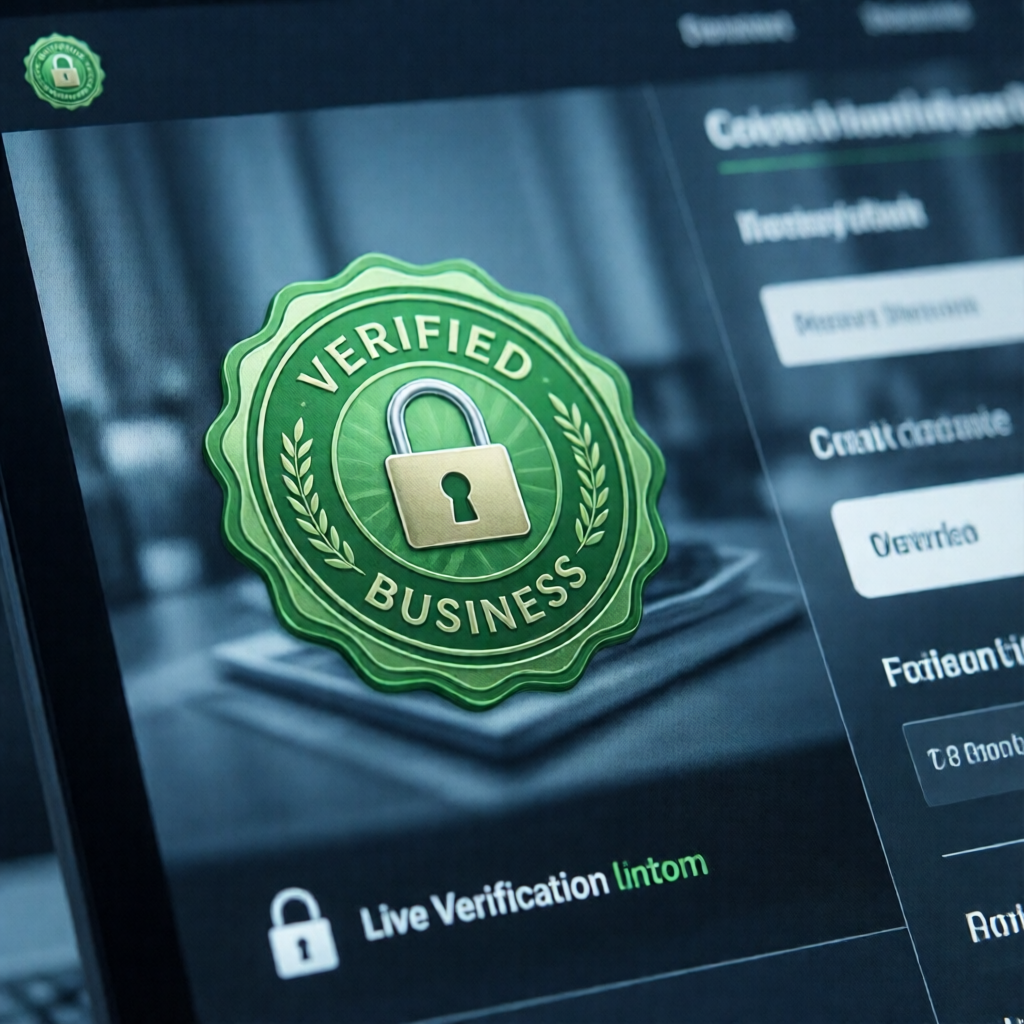
The critical mechanism: a verified badge links to a live, publicly accessible certificate page. When a customer clicks it, they see your business name, the issuing organization, and the certification date. That click is the entire credibility engine. Without it, you don't have a sustainability certification badge — you have a graphic.
This matters legally. The FTC's Green Guides (16 CFR Part 260) require that environmental claims be substantiated and non-misleading. A badge implying third-party verification where none exists is an unsubstantiated claim. Your credentials have to be real ones you've actually earned. Fabricating trust signals isn't a gray area — it's illegal.
How to Display a Verified Green Business Badge on Your Website
Three steps. The common mistakes live almost entirely in step three, where businesses bury the badge somewhere it does zero work.
Badges placed near checkout buttons lift conversion rates. Third-party trust signals tell customers your environmental claims aren't marketing copy — they're audited fact. A verified sustainability seal works exactly like a PCI compliance badge at checkout: it signals accountability, not aspiration.
What Makes a Sustainability Badge Actually Credible?

Not all green seals are equal. Businesses display outdated badges, 404 certificate links, and self-designed logos with no organization behind them. The difference between signal and noise comes down to three things.
First: the badge links to a live, publicly verifiable certificate. One that actually resolves when clicked, shows your business name, and displays the certifying organization. Dead links destroy credibility faster than having no badge at all. Second: it's issued by a named organization with a real audit trail. A vague "eco-certified" seal from an unknown body is worthless — customers can tell the difference, and so can regulators. Third: it renews on a compliance cycle. Annually, or tied to ongoing standards. A one-time purchase with no renewal isn't a certification. It's a receipt.
"A badge without a verifiable certificate behind it is just a graphic. Your trust score depends entirely on what happens when someone clicks it."
| Feature | ✅ Verified Badge | ❌ Unverified Eco-Label |
|---|---|---|
| Certificate link | Live, clickable, resolves to your cert | Links to nothing — or a 404 |
| Issuing body | Named organization with audit trail | No named issuing body |
| Renewal | Annual / ongoing compliance cycle | One-time purchase, no renewal |
| Legal standing | FTC-compliant substantiation | Potential FTC Green Guides risk |
Marcus, a solar equipment retailer in Austin — a composite of clients we see regularly — had a green badge on his homepage for two years. When a savvy B2B buyer clicked it, the link went to a 404. That single broken link cost him more credibility than no badge would have. He replaced it with a green business certification badge linking to an active certificate, then started using it as a sales conversation opener. Same business. Completely different trust posture.
A genuine certification strengthens your overall credibility profile too. When you run a website legitimacy check on your own site, a broken or unverifiable sustainability badge surfaces as a credibility gap — the same gap your customers see when they click it.
Display Your Sustainability Badge With Confidence
A verified sustainability certification badge does double duty. It signals environmental accountability to customers who care, and it draws a hard line between your business and competitors slapping stock green icons on their sites. The verification link is everything. Without it, you have artwork. With it, you have a trust asset that works at every stage of the buying decision — footer to checkout, first visit to final purchase.
Ready to back your green claims with a verified certificate?
Get Your Sustainability Certificate →Frequently Asked Questions
Is a sustainability certification badge the same as an eco-label?
Not exactly. Eco-labels like Energy Star or USDA Organic are product-specific and typically government-regulated. A sustainability certification badge is a business-level trust signal — it tells visitors your entire operation meets verified environmental standards, not just one product line.
Can any business display a green sustainability badge on their website?
Only if they've been certified by a recognized body. Self-designed "eco-friendly" badges with no verification link can trigger FTC Green Guides scrutiny for unsubstantiated environmental claims. Always display badges that link to a live, third-party certificate — that link is your legal and credibility backstop.
Where should I place a sustainability certification badge for maximum impact?
Site footer for sitewide visibility. About page for brand story reinforcement. Near checkout or pricing pages for trust at the decision point. Placement determines whether the badge does work or just exists — and those are very different outcomes.
How often do I need to renew my sustainability certification badge?
Most recognized certification bodies require annual renewal with updated documentation. Your badge should reflect a current certificate — an expired one is worse than none, since it signals you once cared but stopped. Set a calendar reminder 60 days before expiration so your verification link never goes dark.
Bottom Line
A sustainability certification badge is only as strong as the verification behind it. The right badge — properly certified, prominently placed, and linked to a live third-party certificate — does three jobs at once: it builds trust with first-time visitors, it insulates you from FTC scrutiny, and it draws a hard line between your brand and competitors making unverifiable green claims.
- Choose certification bodies with genuine third-party audits, not self-assessments
- Display your badge where buying decisions happen — footer, about page, and checkout
- Always link the badge to your live certificate, not a homepage
- Renew annually — an expired badge erodes the trust it was meant to build
CertifyUSA Team
Our content is reviewed by business certification and compliance professionals. We cover trust badge implementation, content authenticity verification, and business certification best practices to help businesses build credibility online.
Related Articles
Green Business Certification Badge: Display Your Eco Trust Badge (2026)
Learn how to get and display a verified green business certification badge on your website. Show customers your sustainability commitment with a trusted eco trust badge.
Native American Owned Business Badge for Website
Display a Native American owned business badge on your website. Learn how tribal enterprise trust badges complement SBA 8(a) and federal certification programs.
Small Business Certification Badge: Get Certified & Display a Trust Badge
Learn how to get officially certified as a small business and display a certification badge on your website to win government contracts, local customers, and B2B credibility.
Ready to certify your business?
Join thousands of verified businesses on CertifyUSA.