Credential Verification Checklist for Employers (2026)
A practical credential verification checklist for employers — covering education, licenses, employment history, and identity checks before every hire.
One in three job applicants misrepresents something on their resume — a degree never finished, a title inflated by one level, a license that expired two years ago. SHRM puts the figure for outright inaccurate applications at 53%. A single bad hire in a credentialed role can trigger negligent hiring claims, licensing board sanctions, and reputational damage that outlasts the employee. The credential verification checklist for employers exists precisely because hiring pressure makes shortcuts tempting — and shortcuts in this area carry consequences.
The fix is a process. Apply it consistently. Document it every time.
- Credential verification confirms education, licenses, work history, and identity are real — before any offer is extended.
- The 5-step checklist covers education, professional licenses, employment history, identity/I-9, and digital certification badges.
- When verification fails, document everything — your paper trail is your legal protection.
- A digital verification certificate proves you did due diligence — and gives you something concrete to show if it's ever challenged.
Why Skipping Verification Is the Most Expensive Shortcut in Hiring
Hiring pressure is real. A role open for 90 days, a strong-looking candidate in the inbox — the instinct is to move fast. That's exactly when corners get cut.

Inaccurate applications run the full range — embellished job titles, inflated credentials, fabricated degrees. In regulated industries — healthcare, law, financial services — a lapsed or fraudulent license isn't just an embarrassment. Your organization owns the liability. A structured verification run takes 1–5 business days. That's a small price against the cost of unwinding a bad hire. Understanding the difference between credential evaluation vs. credential verification is the foundation of building that process correctly.
The 5-Step Credential Verification Checklist
Run these in sequence. Every step has weight — but steps 1 and 2 carry the heaviest legal exposure.
-
1Education Verification
Contact the registrar directly or engage a NACES-member evaluation service to confirm the degree, institution, and graduation year. Photocopies don't cut it — registrar-issued transcripts or official evaluations are the standard. International credentials require an additional evaluation step; the top credential evaluation services for 2026 offers a vetted shortlist.
-
2Professional License Check
Go straight to state licensing board databases — most are publicly searchable and return real-time status. For healthcare roles, cross-reference the National Practitioner Data Bank (NPDB); for attorneys, check the state bar. Confirm the license is active, not expired or suspended, and log the expiry date for future re-verification.
-
3Employment History Confirmation
Call previous employers directly. References are self-selected — they tell you nothing you weren't already meant to hear. Verify employment dates, job title, and rehire eligibility. Even a single-title inflation ("Director" vs. "Senior Manager") matters when compensation is tied to seniority.
-
4Identity & Right-to-Work
Complete Form I-9 compliance before the first day of work — not after. Cross-check government-issued photo ID against the name used across all credential documents. Any discrepancy in name spelling, date of birth, or document number must be resolved before you proceed.
-
5Certification & Credential Badges
For roles requiring professional certifications — PMP, CPA, AWS and the like — verify through the issuing body directly, not the certificate printout. Check expiry dates. Confirm the certifying body is accredited. Platforms like CertifyUSA issue tamper-evident digital trust badges tied to verified credential records, so authenticity can be confirmed in seconds.
"Don't rely solely on references the candidate hand-picked. Call previous employers. Verify the title. Verify the dates. The gaps in a résumé are where the risk lives."
— Best practice, employment verification step 3

Three Failure Scenarios — and Exactly What to Do
Verification doesn't always come back clean. Here's how to handle the three most common failures without creating legal exposure for yourself.
Place the offer on conditional hold. Give the candidate 30 days to demonstrate reinstatement. Document the hold in writing.
Immediate disqualification. You have a legal duty to document the finding and the decision. Do not extend the offer.
Request a written explanation from the candidate before proceeding. Some gaps are legitimate — undisclosed terminations are not.
Document every verification step. If a dispute arises — a wrongful termination claim, a licensing board inquiry — your paper trail is your protection. No documentation means no defense.
Credential verification is not the same thing as a background check. The credential verification vs. background check breakdown is essential reading before your next hire cycle. Treating them as interchangeable creates gaps that neither one covers.
Negligent hiring claims — where an employer is sued for failing to vet a candidate's credentials before placing them in a role — are among the fastest-growing areas of employment litigation in the US, particularly in healthcare, education, and financial services.
Make the Verification Official With a Digital Certificate
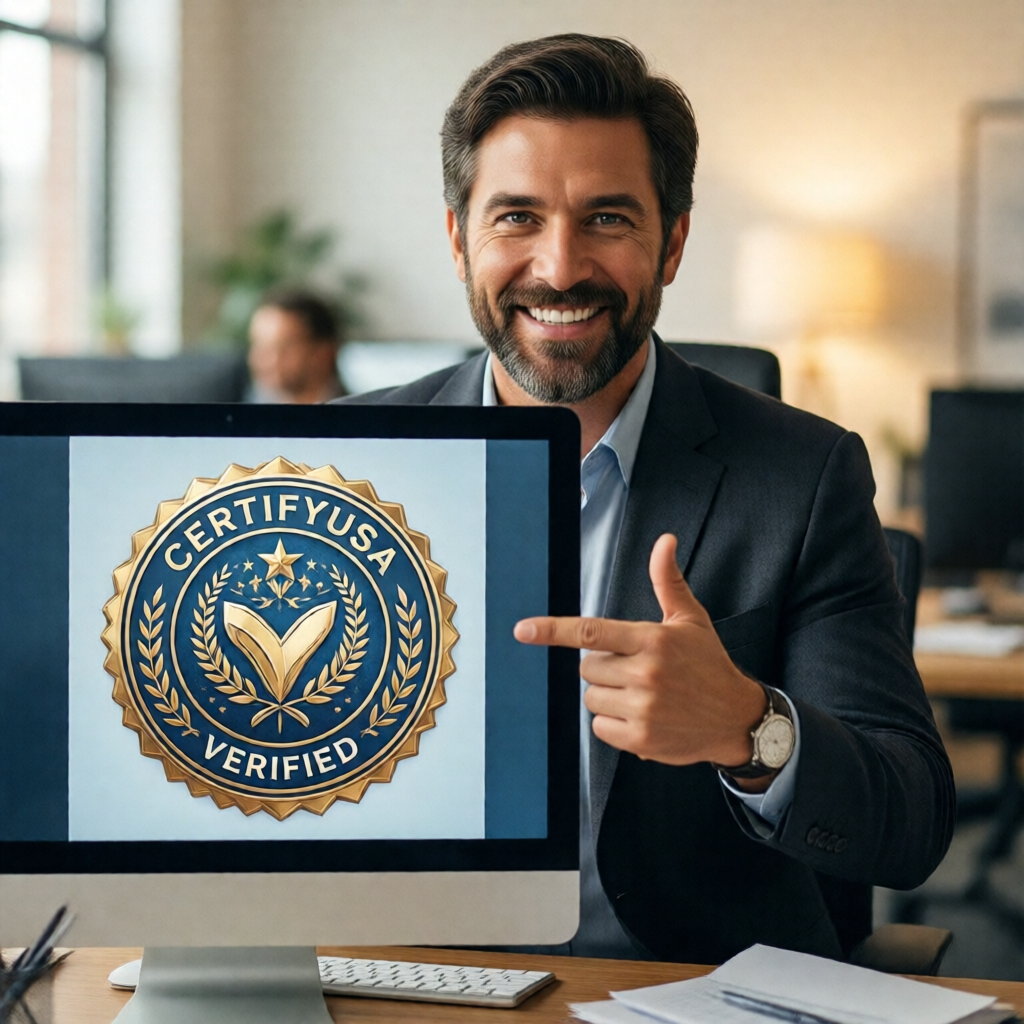
Once your verification process is complete, issuing a verified hire certificate or digital trust badge through a platform like CertifyUSA's business verification service signals compliance to candidates, clients, and regulators alike. It's tamper-evident, shareable, and auditable — exactly what you need if your process is ever questioned.
For teams running high-volume hiring or operating in regulated industries, a documented verification workflow backed by digital certificates isn't a nice-to-have. It's the standard. See the certificate pricing page for current plans, including options for ongoing credential monitoring.
For a step-by-step breakdown of each source database, this walkthrough on verifying professional credentials online covers the full lookup process in detail.
A credential verification checklist protects your organization from bad hires, legal liability, and licensing violations. A digital certificate proves you did the work — and gives you something concrete to show if it's ever challenged.
Ready to make your hire official?
Issue a verified hire certificate or digital trust badge in minutes — tamper-evident, shareable, and built for compliance.
Get Your Verification Certificate →Frequently Asked Questions
What is the most important step in credential verification for employers?
Education and license verification carry the most legal weight. A falsified degree or lapsed professional license creates direct liability — always verify through official sources (registrar, state board, NPDB) before extending an offer.
How long does credential verification take?
Basic checks — identity and education — typically take 1–3 business days. Professional license lookups are often instant via state board databases. Full employment history verification can run 3–5 business days depending on how quickly previous employers respond.
Can employers use digital trust badges as proof of credential verification?
Yes. Platforms like CertifyUSA issue verifiable digital certificates and trust badges tied to a defined verification process — providing a shareable, tamper-evident credential record accepted as evidence of due diligence in regulated industries.
Is credential verification the same as a background check?
No — and conflating the two creates hiring gaps. Background checks cover criminal history and public records. Credential verification confirms the accuracy of qualifications, licenses, and employment history. Many organizations run both; understand what each covers before relying on either alone.
Bottom Line
Credential verification is not a formality — it is your first line of defense against fraud, liability, and bad hires. Verify education and licenses through official sources, document every step, and treat unverifiable claims as disqualifying. Organizations that build verification into standard onboarding consistently report fewer compliance incidents and stronger workforce quality over time.
Onboarding a new hire? Generate their first pay stub in minutes.
PSD's pay stub generator creates accurate, professional pay stubs accepted by landlords, lenders, and agencies — no payroll software required.
Create a Pay Stub Free →CertifyUSA Team
Our content is reviewed by business certification and compliance professionals. We cover trust badge implementation, content authenticity verification, and business certification best practices to help businesses build credibility online.
Related Articles
How to Verify Professional Credentials Online (2026 HR Guide)
HR teams: learn the fastest ways to verify professional credentials online in 2026 — step-by-step methods, trusted tools, and red flags to watch for.
Sustainability Certification Badge for Websites | Verified Green Business Seal
Learn how to display a sustainability certification badge on your website. Show customers you're a verified green business with an eco-friendly trust seal that builds credibility.
Green Business Certification Badge: Display Your Eco Trust Badge (2026)
Learn how to get and display a verified green business certification badge on your website. Show customers your sustainability commitment with a trusted eco trust badge.
Ready to certify your business?
Join thousands of verified businesses on CertifyUSA.