Credential Verification vs. Credential Evaluation: Key Differences (2026)
Credential verification confirms your degree is real. Credential evaluation translates it for US use. Learn the difference and which one you actually need.
You've got a job offer contingent on degree verification. Or you moved from the Philippines last year and need your nursing credentials recognized in Texas. Two completely different problems — but people confuse the services constantly, order the wrong one, and lose weeks they can't get back.
The fast answer: credential verification confirms your degree is real. Credential evaluation translates it into US equivalents. One checks authenticity; the other checks meaning. They're not interchangeable — and in many cases, you need both.
- Verification = did you actually earn this degree?
- Verification is for employers, licensing boards, and background checks
- Evaluation is for foreign-trained professionals seeking US recognition
- Sponsoring a visa or USCIS petition? You likely need both — in sequence
- Evaluation does NOT prove authenticity on its own — that's a common mistake
The Core Difference in One Sentence
Credential verification asks: "Did this person really earn this degree from this institution?" Credential evaluation asks: "What does this foreign degree actually mean in the US context?"
Verification is a yes/no authenticity check. Evaluation is a translation service. One is about trust; the other is about equivalency. Order the wrong one and you're not just out $150 — you've blown your application window.

When Credential Verification Is What You Actually Need
Credential verification is for US employers running background checks, professional licensing boards confirming applicant claims, and immigration attorneys building a visa petition. The trigger is always the same: someone has claimed they hold a credential, and you need proof it's real.
Domestic degrees move fast. Most verification services contact the issuing institution directly and return a result within days. Foreign institutions are a different story. International registrar response times vary wildly — some countries run centralized verification systems, others don't. If you're hiring a foreign-trained engineer or physician, build the extra runway into your timeline now, not after you've made an offer. Our breakdown of how long credential verification takes in the US covers country-by-country expectations.
Employers building a screening workflow: start with the credential verification checklist for employers before engaging any service. Having the right documents upfront cuts turnaround in half.
When Credential Evaluation Is What You Actually Need

Take Amara — a registered nurse from Nigeria who completed her BSN at a recognized Lagos institution (a composite of clients we regularly see). Her degree is absolutely real. But to sit for the NCLEX and get licensed in California, she needs a NACES-member evaluation agency to map her coursework to US equivalencies. No evaluation, no license application. Full stop.
Credential evaluation serves immigrants applying for professional roles, international students applying to US graduate programs, and foreign-trained professionals seeking state licensure — nursing, engineering, teaching, law. Agencies like WES and ECE are NACES-member evaluation services that produce formal reports mapping your foreign credential to its nearest US equivalent.
Evaluation doesn't verify authenticity. An evaluation report tells you what your degree equals — not whether it's genuine. For full credentialing, you often need both services.
Here's the comparison most people need before they order anything:
| Feature | Credential Verification | Credential Evaluation |
|---|---|---|
| Purpose | Confirms degree authenticity | Translates foreign credentials to US equivalents |
| Who Requests It | Employers, licensing boards, immigration attorneys | Foreign-trained professionals, graduate school applicants |
| Output | Verification letter / status report | Equivalency report (e.g. "equivalent to US Bachelor's degree") |
| Cost Range | Roughly $50–$200 | Roughly $100–$400 |
| Timeframe | 1–5 days (domestic); up to 6 weeks (foreign) | 7–10 days standard; 3–5 days rush |
| Common Use Cases | Background checks, visa petitions, hiring | Licensure, grad school admission, immigration benefits |
For a deeper look at the top agencies, see our guide to the best credential evaluation services in the US for 2026. Deciding between bundled service options? See our detailed credential evaluation vs verification comparison for 2026.
NACES-member agencies follow strict standards — but they do not independently verify whether the degree was genuinely awarded. Their report assumes the documents are real. That's exactly why USCIS and most state licensing boards require a separate verification step alongside the evaluation report.
3-Step Decision Guide: Pick the Right Service Before You Order
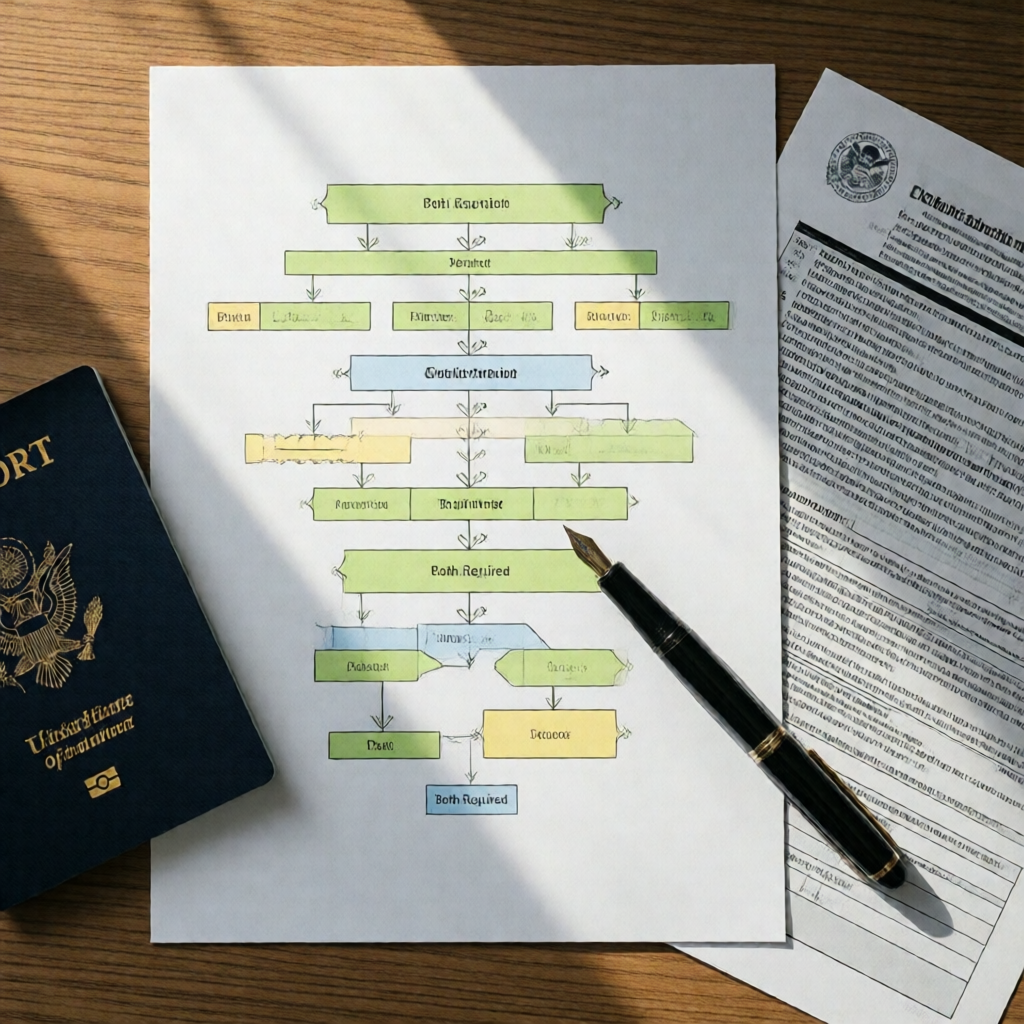
Most people who order the wrong service discover the mistake only when their application bounces. Here's how to get it right the first time.
-
1Are you a US employer confirming a job candidate's claimed degree?
You need credential verification. A background check firm or the issuing institution confirms whether the degree exists and was awarded to that person. Full stop. -
2Are you a foreign-trained professional seeking US licensure or graduate school admission?
You need credential evaluation — and probably verification too. Most state licensing boards want both: proof the degree is real, and proof it meets their equivalency standards. If your deadline is tight, order them simultaneously. -
3Are you sponsoring a visa or filing a USCIS petition?
You need both — in sequence. Get the evaluation first (for the equivalency determination), then the verification (to confirm authenticity for the immigration record). USCIS expects both; submitting only one is a leading cause of RFEs. Foreign documents may also need authentication — our guide to apostille for foreign employment documents covers when that extra step applies.
Verification proves a credential is real. Evaluation proves what it's worth in the US. Check what your specific licensing board or employer requires — most publish their documentation checklist. If international credentials meet any immigration process, assume you need both and budget accordingly.
Frequently Asked Questions
Can one service do both credential verification and credential evaluation?
Some agencies advertise bundled services, but verification and evaluation are structurally different processes handled by different types of organizations. Verification is performed by background check firms or by the issuing institution itself; evaluation is performed by NACES-member agencies. Before ordering, confirm which service you actually need — and whether the bundled version satisfies the specific requirements of your employer, licensing board, or immigration attorney. Don't assume.
Do I need credential evaluation if my degree is from a US university?
No. Credential evaluation is only for foreign (non-US) academic credentials. If your degree is from a US-accredited institution, employers and licensing boards use standard verification to confirm its authenticity. Ordering an evaluation for a domestic degree is wasted money, and some agencies will decline the request outright.
How long does credential evaluation take compared to verification?
Credential verification typically completes in 1–5 business days for domestic degrees and up to 6 weeks for foreign institutions, depending on country and registrar responsiveness. Credential evaluation via NACES-member agencies usually takes 7–10 business days on standard service, or 3–5 days with rush processing. Hard deadline approaching? Order both simultaneously — and factor in the full foreign-institution window for verification, not just the evaluation timeline.
Is credential verification the same as a background check?
They overlap but aren't identical. A background check typically includes credential verification as one component, alongside criminal history, employment history, and identity verification. Credential verification as a standalone service focuses purely on confirming the academic award. Our article on credential verification vs background checks covers exactly where the two diverge and when you need both.
Know your use case before you order anything. The wrong service doesn't just waste money — it can stall a license application, trigger an immigration RFE, or kill a job offer entirely.
Need credentials certified for US use?
CertifyUSA delivers fast, recognized credential services accepted by US employers and licensing authorities.
Bottom Line
Credential evaluation and credential verification solve different problems. Evaluation converts a foreign degree into a US-equivalent grade level. Verification confirms the degree is real. Most immigration and licensing workflows require both — but in a specific order and from specific types of providers.
- Use a NACES-member evaluator for academic admissions and most state licenses
- Use an accredited verifier for employment background checks and federal credentialing
- Order early — foreign institution response windows routinely add 2–4 weeks
- Confirm your specific authority's accepted provider list before you spend a dollar
CertifyUSA Team
Our content is reviewed by business certification and compliance professionals. We cover trust badge implementation, content authenticity verification, and business certification best practices to help businesses build credibility online.
Related Articles
Certificate of Appreciation for Employees — Create & Customize (2026)
Learn how to create, customize, and present a certificate of appreciation for employees that boosts morale and builds a culture of verified recognition.
Credential Verification Checklist for Employers (2026)
A practical credential verification checklist for employers — covering education, licenses, employment history, and identity checks before every hire.
How to Verify Professional Credentials Online (2026 HR Guide)
HR teams: learn the fastest ways to verify professional credentials online in 2026 — step-by-step methods, trusted tools, and red flags to watch for.
Ready to certify your business?
Join thousands of verified businesses on CertifyUSA.