Foreign Degree Credential Verification Checklist (US) 2026
Step-by-step checklist to verify a foreign degree is recognized in the US — evaluation agencies, NACES members, employer acceptance, and common pitfalls.
A hiring manager in Dallas sees two identical job titles on two resumes. Both claim a Master's in Engineering. One is from Texas A&M. The other is from a university in Brazil. Without formal foreign degree credential verification in the US, that second degree is invisible — to employers, licensing boards, and graduate admissions committees alike. Recognition is never automatic. It demands a paper trail, a vetted agency, and the right report type for the right audience.
The process isn't complicated. It's opaque because nobody maps it clearly. This checklist does.
- Step 1: Identify your purpose — employment, licensure, grad school, or immigration
- Step 2: Choose a NACES- or NAIA-member evaluation agency
- Step 3: Gather official transcripts, diploma copy, and certified translations
- Step 4: Submit and receive your credential evaluation report
- Step 5: Confirm your recipient accepts that specific agency's report
Why Foreign Degree Recognition Isn't Automatic in the US
There is no federal agency that centrally approves foreign credentials. None. Recognition is decided case-by-case — by employers, state licensing boards, universities, and immigration officers — each operating under its own standards.
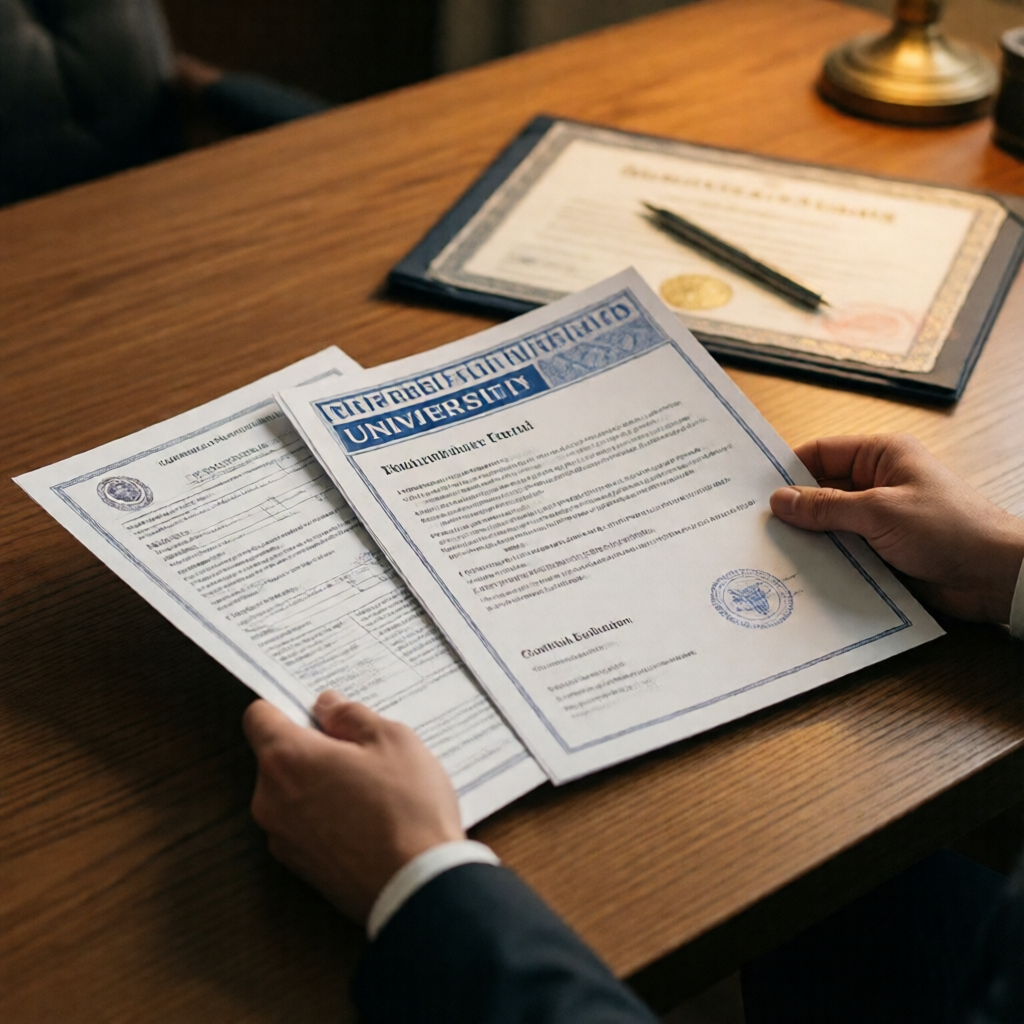
That gap is why the credential evaluation industry exists. Organizations like World Education Services (WES), Educational Credential Evaluators (ECE), and Josef Silny & Associates review foreign documents and issue equivalency reports the US system can act on. The type of report matters as much as the agency issuing it — see our breakdown of credential verification vs. credential evaluation if you're unsure which one your situation requires.
The 5-Step Foreign Degree Verification Checklist
Employment, professional licensure (nursing, engineering, law), graduate school admission, and immigration each demand different evaluation types. A document-by-document report satisfies most employers. A course-by-course breakdown is required by licensing boards and grad school admissions offices. Choose the wrong type and you start over — at full cost.
NACES (National Association of Credential Evaluation Services) and NAIA (National Association of Independent Advisors) both enforce membership standards. WES, ECE, SpanTran, and Josef Silny are the most widely accepted. For a head-to-head breakdown of fees, turnaround times, and acceptance rates, best credential evaluation services for 2026 lays it out side by side.
You need official transcripts mailed directly from your institution — not photocopies, not PDFs downloaded from a student portal. Add a copy of your diploma and certified translations of anything not in English. "Certified" means a professional translator has signed an attestation of accuracy. A bilingual friend does not qualify. Most agencies also require the original-language documents alongside the translation.
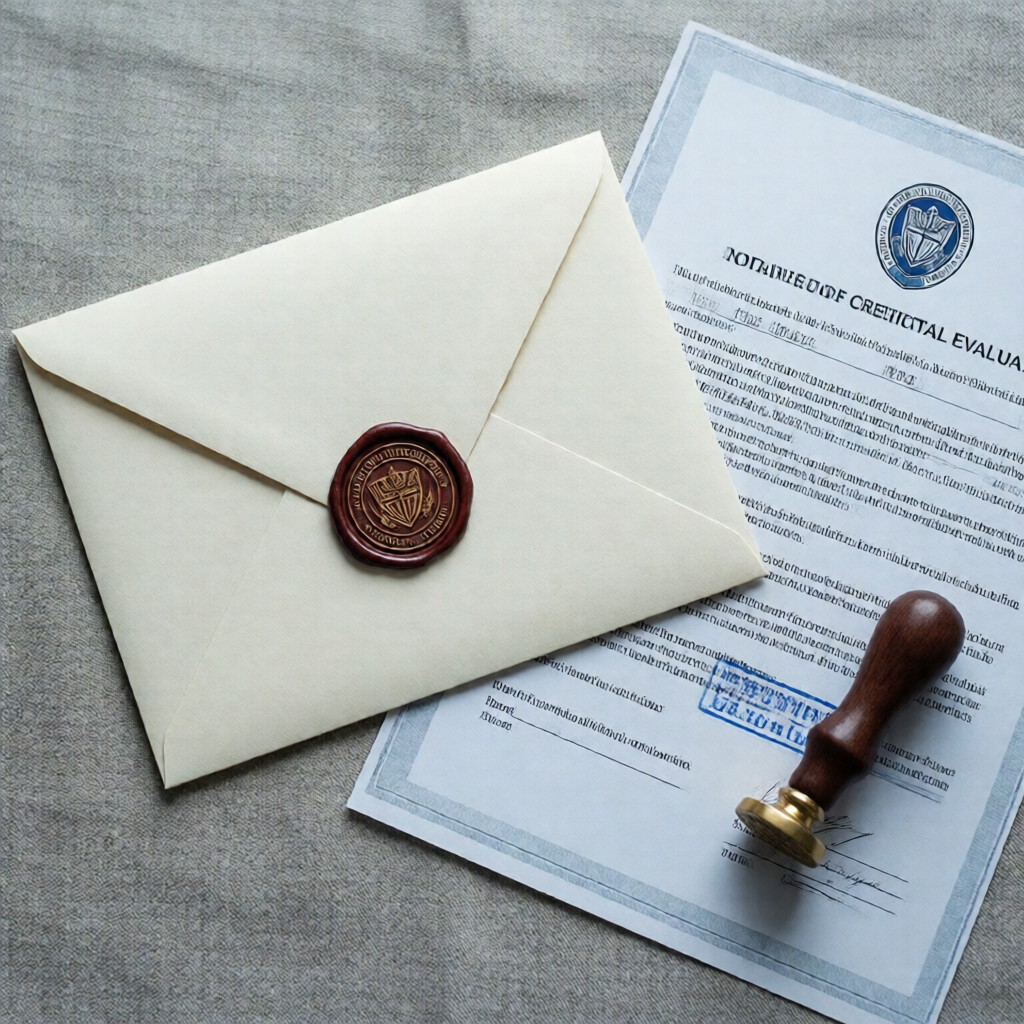
Standard processing runs 7–10 business days after the agency receives everything. Rush options — typically 2–3 days — cost an extra $50–$100 depending on the agency. Your report will classify your degree as a US equivalent (e.g., "equivalent to a US Bachelor of Science in Electrical Engineering"). Keep digital and physical copies. You will use this document more than once. Our guide on how long credential verification takes in the US covers realistic timelines agency by agency.
This is where most people lose weeks. Not every licensing board accepts every NACES member. The California Board of Registered Nursing maintains its own approved evaluator list — being NACES-certified is not enough. Call or email the recipient before you spend money on an evaluation. Ten minutes upfront prevents a three-week delay after the fact.
Not all evaluation agencies are accepted by every licensing board. Verify with the recipient before you apply — not after you've paid, submitted, and waited two weeks for a report you can't use.
Common Mistakes That Delay or Derail Verification
Consider Priya, a registered nurse from the Philippines applying for US licensure. She paid for a credential evaluation from a reputable agency — one that wasn't on her state board's approved list. Her application sat for six weeks before the board rejected it. Starting over cost her three months and a second evaluation fee. Every bit of it was avoidable.
| The Mistake | The Fix |
|---|---|
| Using a non-NACES agency because it's cheaper or faster | Choose a recognized NACES or NAIA member — and confirm it's on your recipient's approved list before you order |
| Submitting photocopies of transcripts or unofficial portal downloads | Send sealed official transcripts mailed directly from your institution to the evaluator |
| Skipping translation or relying on informal translations | Hire a certified professional translator who provides a signed attestation of accuracy |
"Delays almost always trace back to missing documents or the wrong agency — not the evaluation itself. Fix those two variables and the process runs cleanly."
The full credential verification checklist for 2026 covers employer-side requirements in detail — essential reading if you're going through a hiring process rather than licensure.
After Your Degree Is Verified: What to Do With the Report

Provide the original — or a certified copy — directly to the employer, board, or school. Don't email a phone photo. Most recipients want a hard copy mailed from the agency or a digital report on the agency's official letterhead.
Keep at least two certified copies for yourself. You will need this document for multiple applications over the years. Some professionals also attach a verified credential badge to their LinkedIn profile or professional website. CertifyUSA's business verification platform lets you display a trust badge that links directly to documented proof of your credentials — visible to anyone who looks you up.
Verification delays almost always trace back to missing documents or the wrong agency choice. Check recipient requirements before you apply — not after. Five minutes of upfront research saves weeks of back-and-forth.
Frequently Asked Questions
Which credential evaluation agencies are recognized by US employers and licensing boards?
NACES members — including WES, ECE, Josef Silny & Associates, and SpanTran — are accepted by most US employers and universities. Licensing boards are narrower: many states publish their own approved agency lists. Check with your specific board before choosing an evaluator. Don't assume NACES membership is sufficient.
How long does foreign degree credential verification take in the US?
Standard evaluations take 7–10 business days after all required documents arrive. Rush processing (2–3 business days) costs an extra $50–$100. The biggest delays happen on the applicant's side — document gathering, not the evaluation itself.
Does every state licensing board accept the same credential evaluation report?
No — and this misconception causes more wasted money than any other mistake in this process. Nursing, engineering, and teaching boards in particular maintain narrower approved-evaluator lists than the full NACES membership. Contact your state board directly before ordering. A mismatched report is not refundable.
Ready to Verify Your Credentials?
CertifyUSA helps professionals and businesses document, verify, and display their credentials with confidence. Whether you need a trust badge for your professional profile or verified documentation for a hiring process, we've got you covered.
✓ Bottom Line: Foreign Credential Verification in 2026
- Use a NACES-accredited evaluator — but confirm your specific licensing board or employer accepts that evaluator before ordering.
- Gather all documents upfront: certified transcripts, diplomas, and official translations. Missing paperwork is the #1 source of delays.
- Budget 7–10 business days for standard processing; rush options exist but add cost.
- One evaluation report rarely satisfies every purpose — a report ordered for job applications may not satisfy a state nursing or engineering board.
- Digital credential badges and verified profiles significantly increase employer confidence and reduce back-and-forth document requests.
Frequently Asked Questions
Can I use the same credential evaluation report for multiple employers?
Generally yes — most employers accept the same NACES-issued report. The exception is state licensing boards (nursing, engineering, teaching), which often require evaluations from specific approved agencies. Always confirm with each recipient before ordering.
Do I need to get my credentials re-evaluated if I apply for a new job years later?
Not usually. Most evaluation reports have no expiration date. However, some licensing boards require reports issued within the last 3–5 years, and if you've completed additional education abroad since your last evaluation, a new report may be warranted.
What's the difference between a document-by-document and a course-by-course evaluation?
A document-by-document evaluation confirms your degree is equivalent to a US credential (e.g., Bachelor's, Master's). A course-by-course evaluation breaks down every subject and grade into its US equivalent — required for licensing boards and graduate school admissions but overkill for most employment purposes.
Is a credential evaluation the same as background verification?
No. A credential evaluation confirms academic equivalency; it does not verify employment history, criminal records, or professional licenses. Many employers run both processes simultaneously, but they are handled by separate services. Make sure you know which one your employer or board is actually requesting.
CertifyUSA Team
Our content is reviewed by business certification and compliance professionals. We cover trust badge implementation, content authenticity verification, and business certification best practices to help businesses build credibility online.
Related Articles
Sustainable Business Certification Badge: Signal Your Green Commitment
Learn how to get and display a sustainable business certification badge on your website to build trust with eco-conscious customers in 2026.
Disability-Owned Business Badge: Get Your DEI Trust Signal
Display a verified disability-owned business badge on your website. Show customers you're certified, build DEI credibility, and stand out from competitors.
Native American Owned Business Badge for Website
Add a Native American owned business badge to your website. Display your tribal or indigenous identity with a verified trust badge that builds customer confidence.
Ready to certify your business?
Join thousands of verified businesses on CertifyUSA.