Sustainable Business Certification Badge: Signal Your Green Commitment
Learn how to get and display a sustainable business certification badge on your website to build trust with eco-conscious customers in 2026.
Your website says you're sustainable. So does every other brand slapping a green leaf in the footer. The difference between a marketing claim and a verified credential is a sustainable business certification badge — a third-party-backed trust signal that customers, partners, and Google can actually check. Decorative icons are everywhere. Real badges are rare. That gap is your competitive edge.
- A sustainable business certification badge is a verifiable credential — not a logo.
- Real badges link to B Corp, Green Seal, EPA programs, ISO 14001, and similar bodies.
- Badge placement plus schema markup builds trust and lifts SEO simultaneously.
- A badge without verification is greenwashing — with real legal and reputational consequences.
What a Sustainable Business Certification Badge Actually Is (and Isn't)
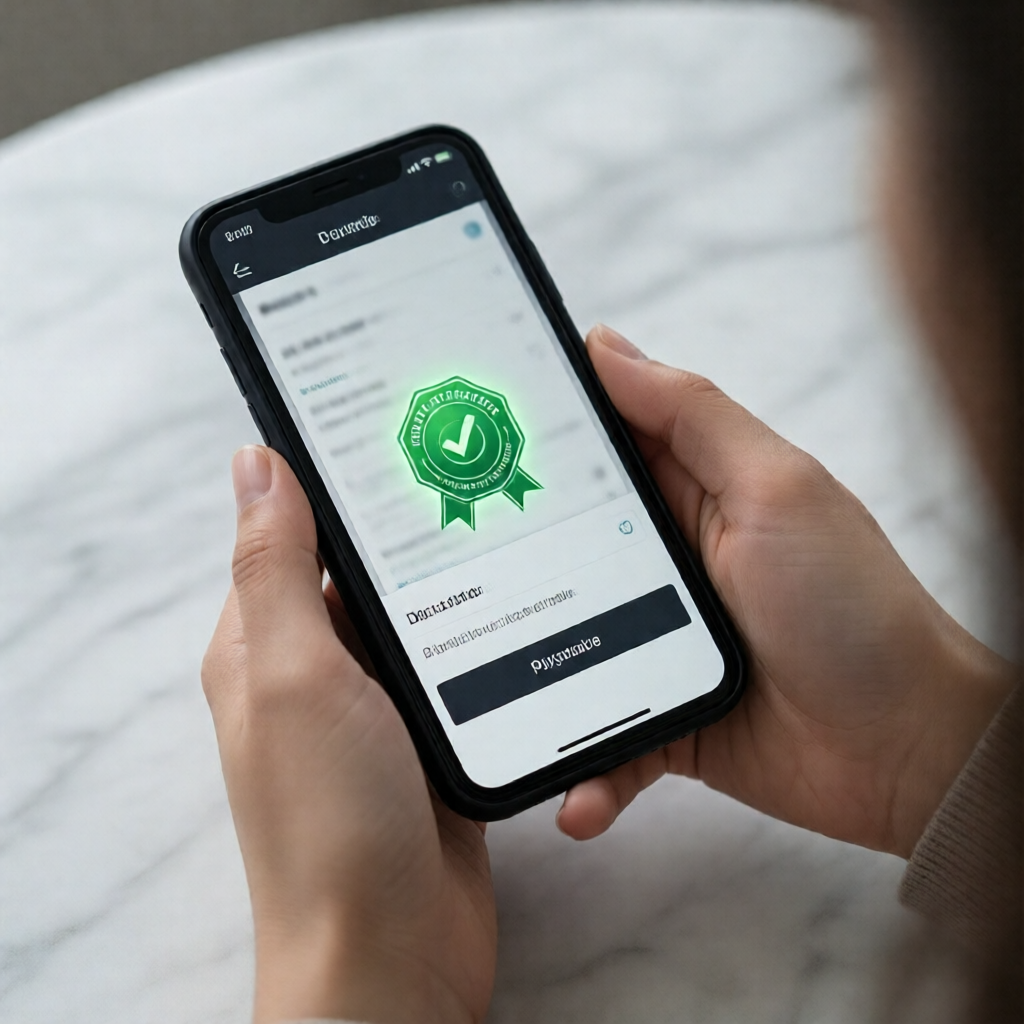
A sustainable business certification badge is a visual credential issued — or authorized for display — by a recognized third-party body after you've met their environmental, social, or governance standards. It is not a stock icon. Not a self-declared logo. Not a color scheme choice that implies responsibility.

Genuine badges link somewhere verifiable — a public registry, a certificate lookup page, or the issuing body's member directory. That link is everything. When a customer clicks it and lands on a confirmation page, the trust signal fires. When it leads nowhere, it backfires.
This distinction carries legal weight in 2026. The FTC has tightened its guidance on environmental marketing claims. The EU's Green Claims Directive is raising the bar globally. Displaying an unverifiable green badge isn't just unconvincing — it exposes your business to regulatory scrutiny. The greenwashing era is closing fast.
"A sustainable business certification badge tells customers, partners, and search engines that your green claims are verified — not just marketing."
The Certifications Worth Displaying as a Badge
Across US industries — retail, food, tech, services, manufacturing — a handful of programs carry real brand recognition and operate verifiable badge programs. Not every green label qualifies. Here are the ones that do.
| Certification | Best For | Badge Available? | Cost Tier |
|---|---|---|---|
| B Corp | Any for-profit business | ✅ Yes | $$–$$$ |
| Green Seal | Products, hospitality, cleaning | ✅ Yes | $$ |
| EPA Green Power Partner | Any business purchasing green power | ✅ Yes (free) | $ |
| 1% for the Planet | Brands with revenue pledges | ✅ Yes | % |
| ISO 14001 | Manufacturing, operations | ✅ Via registrar | $$$ |
| FSC Certified | Paper, packaging, forestry | ✅ Yes | $$ |
Nielsen sustainability research consistently finds that 60–75% of US consumers — depending on age cohort — say verified sustainability credentials influence their purchase decisions. The operative word: verified. Self-declared claims don't move the needle the same way. A badge without a paper trail is just a color choice.
Already building out your trust signal strategy? Our guides on the Green Business Certification Badge and Sustainability Certification Badge cover adjacent programs in more detail.
4 Steps to Add Your Sustainability Badge the Right Way
Getting certified is step one. Displaying the badge where it actually builds trust — and signals credibility to Google — is where most businesses go wrong. Four steps. No developer required for most of it.
-
1
Obtain official badge assets from the issuing body. Don't screenshot a badge from another company's site. Every certification program provides an authorized asset kit — PNG, SVG, or embed code — once verification is complete. Those are the only files you should publish. -
2
Place badges in high-trust zones. Footer, About page, checkout page — those are the three highest-impact locations. A press kit PDF nobody opens does nothing for conversion. Put the badge where decisions get made. -
3
Link every badge to its verification page. Wrap the image in an anchor tag pointing to your public certificate, the program's member directory, or your business verification profile on CertifyUSA. A clickable badge proves it's real. An unlinked badge proves nothing — and a skeptical customer will notice. -
4
Add schema markup for your certification. UseOrganizationschema with thehasCredentialproperty to tell Google your business holds a specific credential. This can surface in AI Overviews and rich results — a meaningful organic search advantage most competitors haven't bothered to implement.
Badges placed near CTAs and checkout pages signal legitimacy at the exact moment a customer is deciding whether to trust you with their money. That placement — not the badge alone — is what converts.
Consider a natural skincare founder who had her Green Seal certification buried in a PDF on her press page for eight months. Moving the badge to product pages and linking it to the Green Seal registry produced a measurable drop in cart abandonment from first-time buyers. The certification didn't change. The visibility did. That's the whole point.

For small business certification specifically, the schema step is almost always skipped. It's also one of the highest-ROI technical improvements you can make without touching a line of custom code. Don't skip it.
If you're unsure how your current site rates for trust signals overall, CertifyUSA's trust score tool gives you a solid baseline to work from.
A badge without a verifiable credential is greenwashing — legally risky and increasingly detectable by both regulators and savvy consumers. Get the certification, display it correctly, link it to proof, mark it up for search. Ready to make your sustainability status official and displayable? Start your business verification at CertifyUSA.
Frequently Asked Questions
Do I need an official certification to display a sustainability badge on my website?
Technically, nothing prevents you from creating a generic green icon — but doing so without third-party backing is greenwashing and creates real FTC exposure. A legitimate sustainable business certification badge comes from a recognized issuing body (B Corp, Green Seal, EPA, and others) and links to verifiable credentials. Self-declared badges don't build trust. They erode it.
What's the difference between a sustainability badge and a green energy certification badge?
A green energy certification badge signals specifically that your business purchases or generates renewable power — EPA Green Power Partner and ENERGY STAR fall here. A sustainability badge is broader: environmental management systems, supply chain practices, carbon commitments, social impact. Many businesses earn both and display them as a pair. They reinforce each other.
Can small businesses get a sustainable business certification badge affordably?
Several programs are genuinely accessible at startup scale. EPA Green Power Partner is free if you meet the purchase threshold. 1% for the Planet charges a percentage of revenue — no flat fee. Green Business Network tiers start in the hundreds annually. B Corp is the most rigorous and expensive, but sliding-scale fees apply to smaller revenue bands. Start with the program that fits your industry and budget, then build from there.
Ready to make your sustainability credentials verifiable and displayable?
CertifyUSA helps US businesses verify, certify, and display their trust signals professionally — across sustainability, identity, and compliance.
Verify Your Business →The Bottom Line
A sustainable business certification badge is only as powerful as the credibility behind it. Third-party verified badges from recognized programs — B Corp, EPA Green Power Partner, Green Seal, 1% for the Planet — signal real commitment. Self-declared graphics signal nothing.
Display the badges you've earned. Pursue the ones that fit your industry and scale. And make sure every badge on your site links to verifiable proof — because customers, partners, and regulators are increasingly checking.
Frequently Asked Questions
How long does it take to earn a sustainable business certification badge?
It depends on the program. EPA Green Power Partner approval typically takes 4–8 weeks after you meet the purchase threshold. B Corp certification averages 6–12 months due to the full B Impact Assessment review. Green Business Network and similar regional programs often turn around in 30–60 days. Start your application before you need the badge — there's always a processing queue.
Do I need to renew my sustainable business certification badge?
Yes. Most certifications have annual or biennial renewal requirements. B Corp recertifies every three years. ENERGY STAR certifications require annual benchmarking submissions. Letting a certification lapse without removing the badge is a compliance risk — it becomes a misleading claim the moment the credential expires.
Can I display a certification badge on invoices and pay stubs?
Many businesses do include certification badges in branded documents — invoices, estimates, and employee pay stubs — as a trust signal with clients and staff. Check your certification agreement for any display restrictions. When in doubt, link the badge to your public verification page so anyone who receives the document can confirm it's current.
What happens if a competitor is using a fake sustainability badge?
Report it to the issuing body first — most certification programs have an enforcement contact for badge misuse. For egregious cases involving consumer deception, the FTC accepts complaints under its Green Guides enforcement framework. Documenting the fake claim with screenshots and timestamps strengthens any formal report.
CertifyUSA Team
Our content is reviewed by business certification and compliance professionals. We cover trust badge implementation, content authenticity verification, and business certification best practices to help businesses build credibility online.
Related Articles
Disability-Owned Business Badge: Get Your DEI Trust Signal
Display a verified disability-owned business badge on your website. Show customers you're certified, build DEI credibility, and stand out from competitors.
Credential Verification Checklist for Employers (2026)
A practical credential verification checklist for employers — covering education, licenses, employment history, and identity checks before every hire.
How to Verify Professional Credentials Online (2026 HR Guide)
HR teams: learn the fastest ways to verify professional credentials online in 2026 — step-by-step methods, trusted tools, and red flags to watch for.
Ready to certify your business?
Join thousands of verified businesses on CertifyUSA.