AI Content Detection Badge for Website | Show Human-Written Content
Add an AI content detection badge to your website to signal human-written, AI-free content. Build reader trust and stand out in 2026.
Your website could be publishing genuinely expert, human-written content — and readers still won't trust it by default. AI-generated articles have flooded every niche. Visitors are skeptical on arrival. An AI content detection badge for website use cuts through that skepticism in three seconds flat: a visible, verifiable declaration that a real human wrote what they're reading.
- An AI content detection badge is a trust seal certifying your content was written by humans, not generated by AI tools.
- Reader skepticism is high and rising — a visible badge addresses it at the exact moment of engagement.
- Adding one takes four steps: generate, place, link to a verification page, and optionally publish an editorial policy.
- The differentiator right now isn't just writing well — it's proving you did.
What an AI Content Detection Badge Actually Does
An AI content detection badge is a visual trust signal — a seal or certified label — displayed on your website to declare that your content was written by human authors. Think of it the way you'd think of an ISO 27001 badge for a website: not decoration. It tells visitors something specific and verifiable about how you operate.
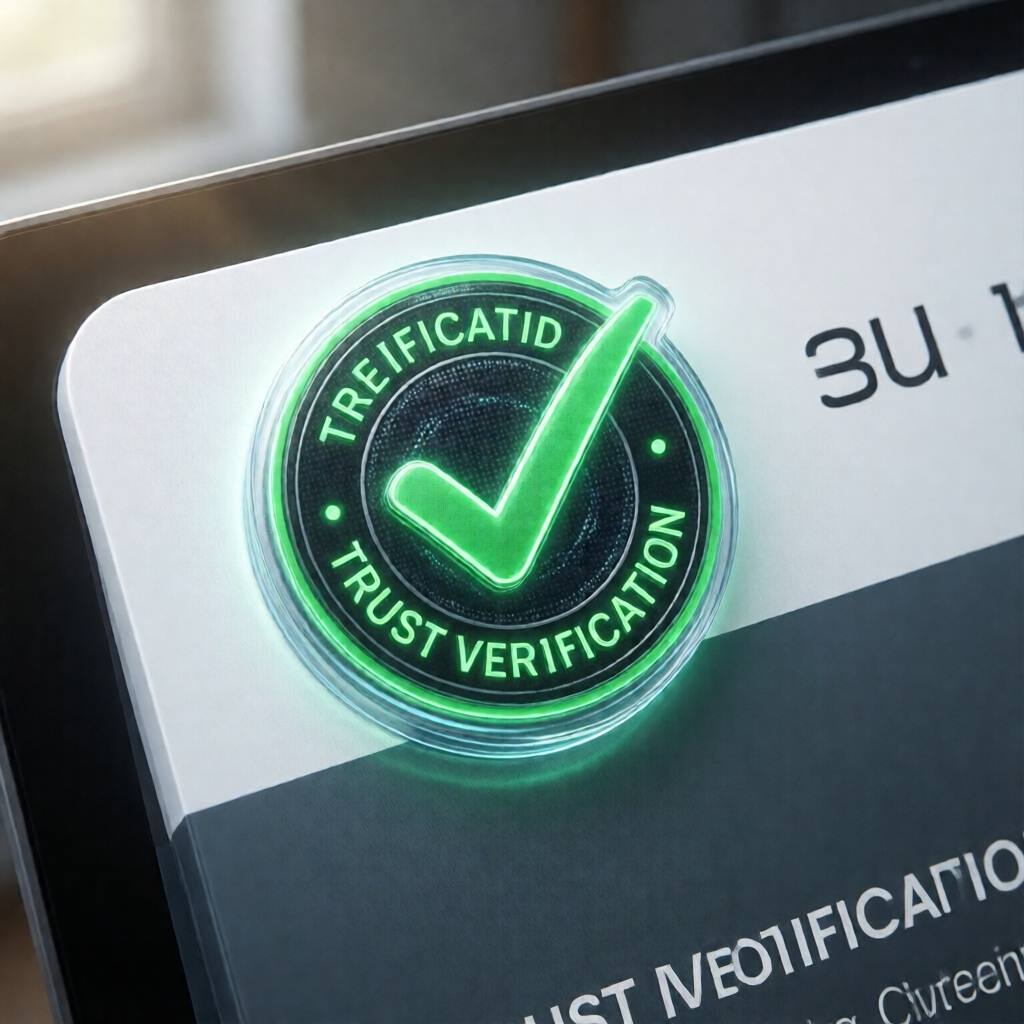
Every reader arriving at your site carries the same silent question: "Did a real person write this?" That question now shapes behavior — bounce decisions, subscription choices, purchase intent. Publishers, service businesses, agencies, independent bloggers: all losing reader confidence to the same problem. Most haven't done a thing about it.
A badge without backing is just a graphic. The ones that work link through to a trust score page or formal certification, so skeptical readers can verify the claim themselves. That's the difference between a sticker and a signal.
Three Reasons This Matters More Than You Think Right Now
Reader trust is eroding fast. Six in ten readers now admit they're unsure whether articles online were written by humans or generated by AI. That skepticism doesn't stay passive. It shows up in higher bounce rates, lower time-on-page, reduced conversions. Businesses that ignore it are paying an invisible tax on every piece of content they publish.
SEO differentiation is real. Google's E-E-A-T guidelines — Experience, Expertise, Authoritativeness, Trustworthiness — are the framework for content quality assessment. Human authorship is a core signal within it. A verifiable badge reinforces the credibility signals search engines are already looking for. Same logic that makes an HIPAA compliance badge for a website worth displaying even when you're already compliant.
Brand authority compounds over time. Consider a marketing agency owner who added a human content certification badge after noticing that prospects kept asking whether his team or "the AI" wrote their deliverables. Within two months, the badge had become a conversation opener and a differentiator in proposals. He didn't change his writing process. He just made it visible.
"Businesses that visibly certify human authorship see stronger audience retention and brand authority — not because readers can tell the difference on the page, but because the badge gives them permission to trust what they're reading."
When AI content is everywhere, a verifiable human-authorship badge is one of the fastest credibility upgrades available — and it costs almost nothing to implement.
How to Add an AI Content Detection Badge to Your Website

Four steps. No developer required for most platforms.
Badge linked to a formal verification page — readers click through, confirm the certification is real, and leave with more trust than they arrived with.
A generic "Human Written ✓" label with no source, no link, no backing. Already-skeptical readers assume you made it yourself. That defeats the entire purpose.
The same principle that makes compliance badges effective — verifiable, specific, linked to a credentialing body — applies directly to human content badges. Readers process trust signals in under three seconds. Make yours count.

The Bottom Line
An AI content detection badge is one of the fastest ways to signal authenticity to both readers and search engines. When the web is flooded with AI output, human verification isn't a nice-to-have. It's a competitive edge that compounds every time a reader decides to stay, subscribe, or buy.
Frequently Asked Questions
What does an AI content detection badge mean on a website?
It means the site owner is certifying that their content was written by human authors, not generated by AI tools. It's a trust signal for readers who want authentic, expert-driven information — similar to how a veteran-owned business badge signals something specific and credible about the business behind it.
Is an AI-free content badge recognized by Google?
Google doesn't officially endorse specific badges, but human authorship directly supports E-E-A-T — Google's quality framework for content evaluation. Displaying verifiable human content credentials strengthens the signals search engines are already looking for, particularly for YMYL (Your Money or Your Life) content categories.
Can any website add an AI content detection badge?
Yes. Any business, blogger, or publisher creating original human-written content can add one. For maximum credibility, back it with a formal certification or trust score rather than a self-made label — that's what makes it a real trust signal instead of just a graphic.
How is an AI content badge different from a regular authorship disclosure?
An authorship disclosure names who wrote the content. An AI content detection badge goes further — it certifies the entire content production process is human-driven, often backed by a third-party verification standard. That independent verification is what gives it weight with skeptical readers and search algorithms alike.
CertifyUSA Team
Our content is reviewed by business certification and compliance professionals. We cover trust badge implementation, content authenticity verification, and business certification best practices to help businesses build credibility online.
Related Articles
Credential Verification Checklist 2026 — What Gets Checked & How
A step-by-step credential verification checklist for employers, clients, and platforms. Learn exactly what gets verified and how to pass every check in 2026.
Website Legitimacy Checker — How to Verify If a Website Is Real (2026)
Use a website legitimacy checker to spot scam sites fast. Learn what trust badges, SSL seals, and business certifications actually signal — and how CertifyUSA helps prove your site is real.
Certificate Template for Small Business | Create Professional Certificates
Need a certificate template for your small business? Learn how to create professional certificates that build trust, cover key use cases, and choose between downloadable vs hosted badge approaches.
Ready to certify your business?
Join thousands of verified businesses on CertifyUSA.