Credential Verification Checklist 2026 — What Gets Checked & How
A step-by-step credential verification checklist for employers, clients, and platforms. Learn exactly what gets verified and how to pass every check in 2026.
A hiring manager at a mid-size Denver healthcare firm once onboarded a contract nurse listing a valid-looking ACLS certification — right up until day three, when it came back expired by 14 months. The credential looked real. It just wasn't current. One missed step. One week of remediation.
A credential verification checklist is a step-by-step process to confirm that a certification, degree, or professional license is real, current, and issued by a recognized body. Not optional — not in 2026. AI-generated fake certificates are spreading fast, remote hiring crosses state and national lines, and platforms like LinkedIn now enforce issuer accreditation automatically. Skipping even one step is exactly where fraud slips through.
- A 7-step checklist covers everything from issuer accreditation to expiration date checks.
- Employers, freelance clients, and platforms each verify different things — know your audience.
- Five red flags will fail a check instantly — missing registry, no cert ID, expired with no renewal.
- Basic checks take minutes; state board lookups take 2–5 days; international credentials up to 4 weeks.
- A live, queryable trust badge is the fastest way to pass any verification check in 2026.
The 7-Step Credential Verification Checklist
This is the full process — whether you're an employer screening a new hire, a client vetting a freelancer, or a platform onboarding professionals. Work through it in order. Don't shortcut steps 3 and 5. That's where most discrepancies hide.
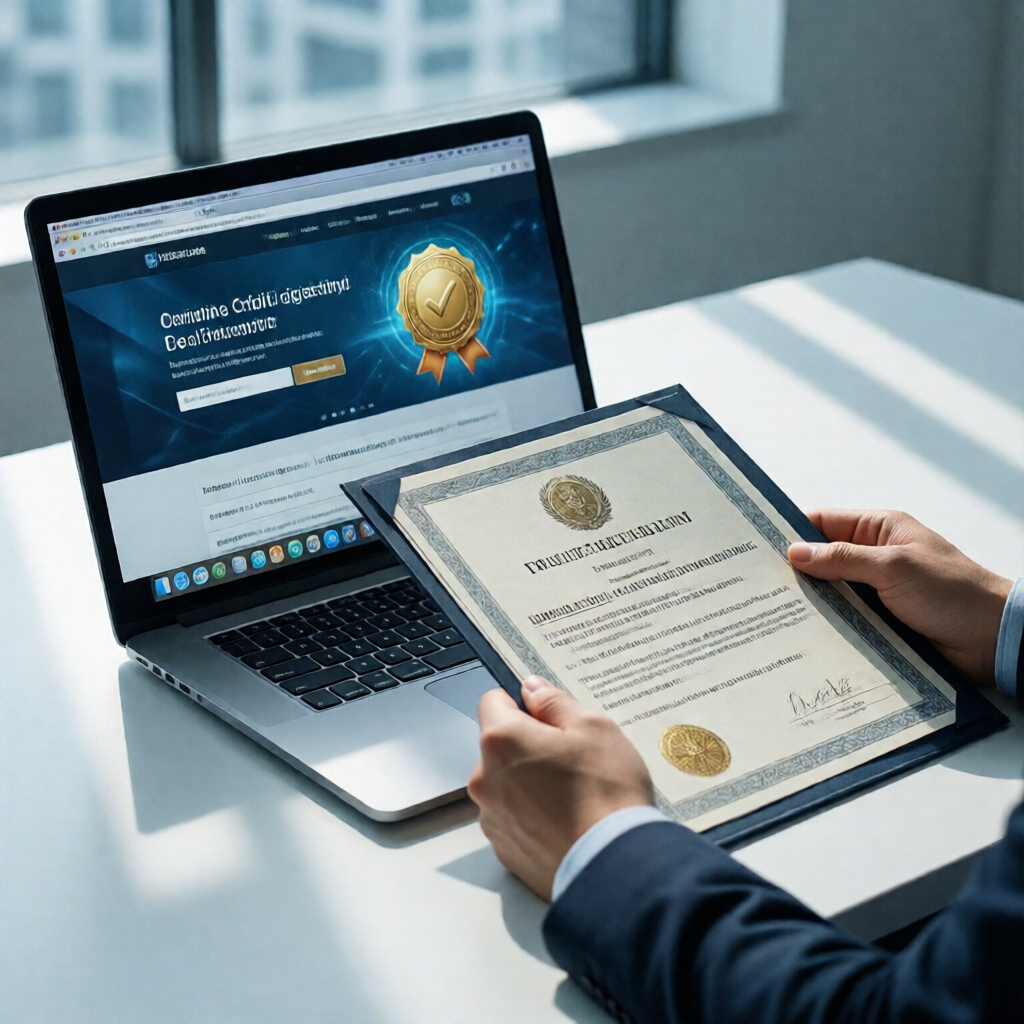
That figure isn't surprising once you understand how easy it is to alter a document. Understanding the difference between a credential verification vs. a background check matters here — verification targets the credential itself, while a background check covers criminal history and employment history. You need both.
What Employers, Clients & Platforms Each Focus On
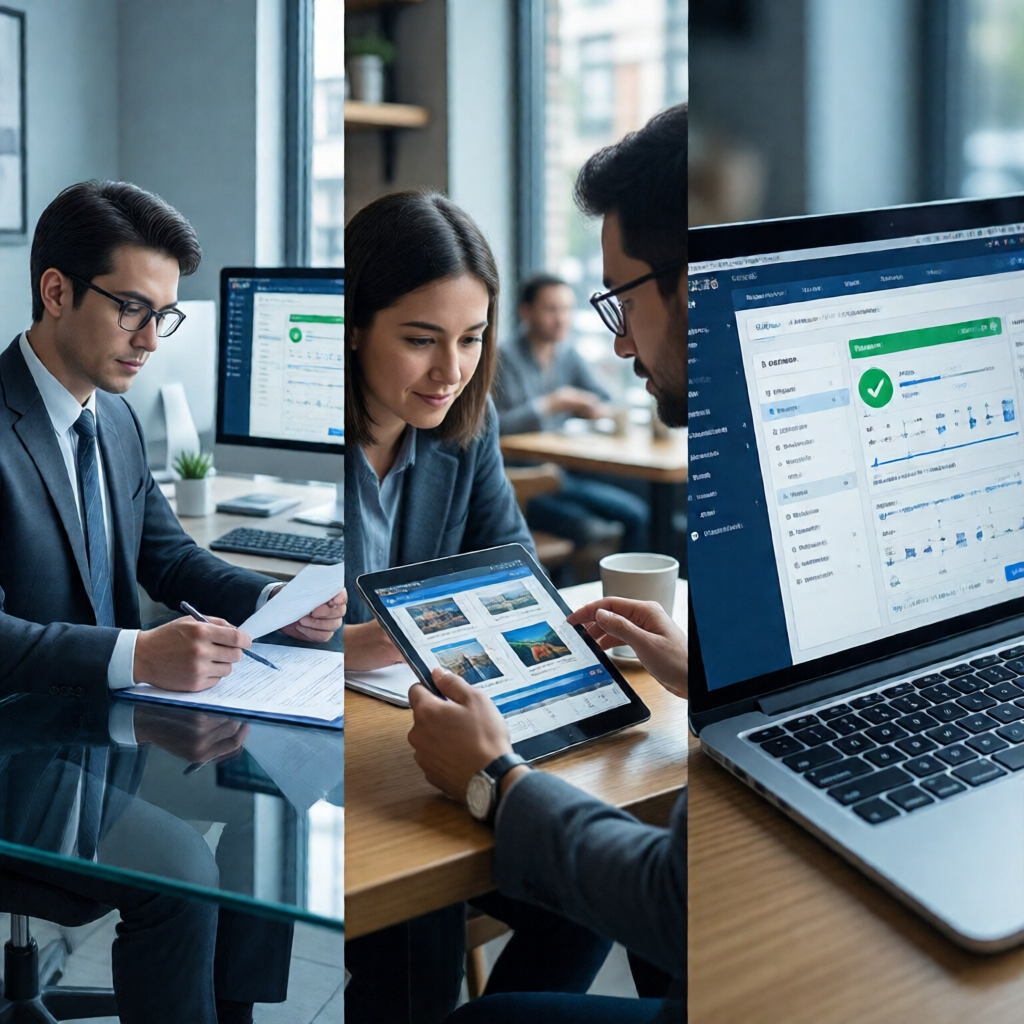
Not everyone runs the same check. Knowing what your audience prioritizes lets you get ahead of the scrutiny.
| Audience | Primary Focus | What They Actually Check |
|---|---|---|
| Employers | Degree authenticity + license status | NSLDS for degrees, state board lookups, employment-history alignment |
| Clients / Freelance | Certification currency | Expiry dates, portfolio-to-credential match, public trust badge on website |
| Online Platforms | Issuer accreditation + real-time verification | CHEA/NCCA accreditation status, automated ID match, live badge URL resolution |
Platforms like LinkedIn now auto-flag certifications from unrecognized issuers. A verifiable trust badge from a recognized third-party — like CertifyUSA's trust score system — prevents false flags and passes platform checks automatically, with no manual follow-up needed.
For international credentials, the process adds a layer. Verifying a foreign-earned degree or professional qualification requires going through a NACES-member evaluation service before you can compare it to a domestic equivalent. It's also worth understanding how credential verification differs from credential evaluation — they serve different purposes and you often need both.
Red Flags That Fail a Credential Check
Five patterns show up constantly in failed verifications. Any one of them should stop the process cold.
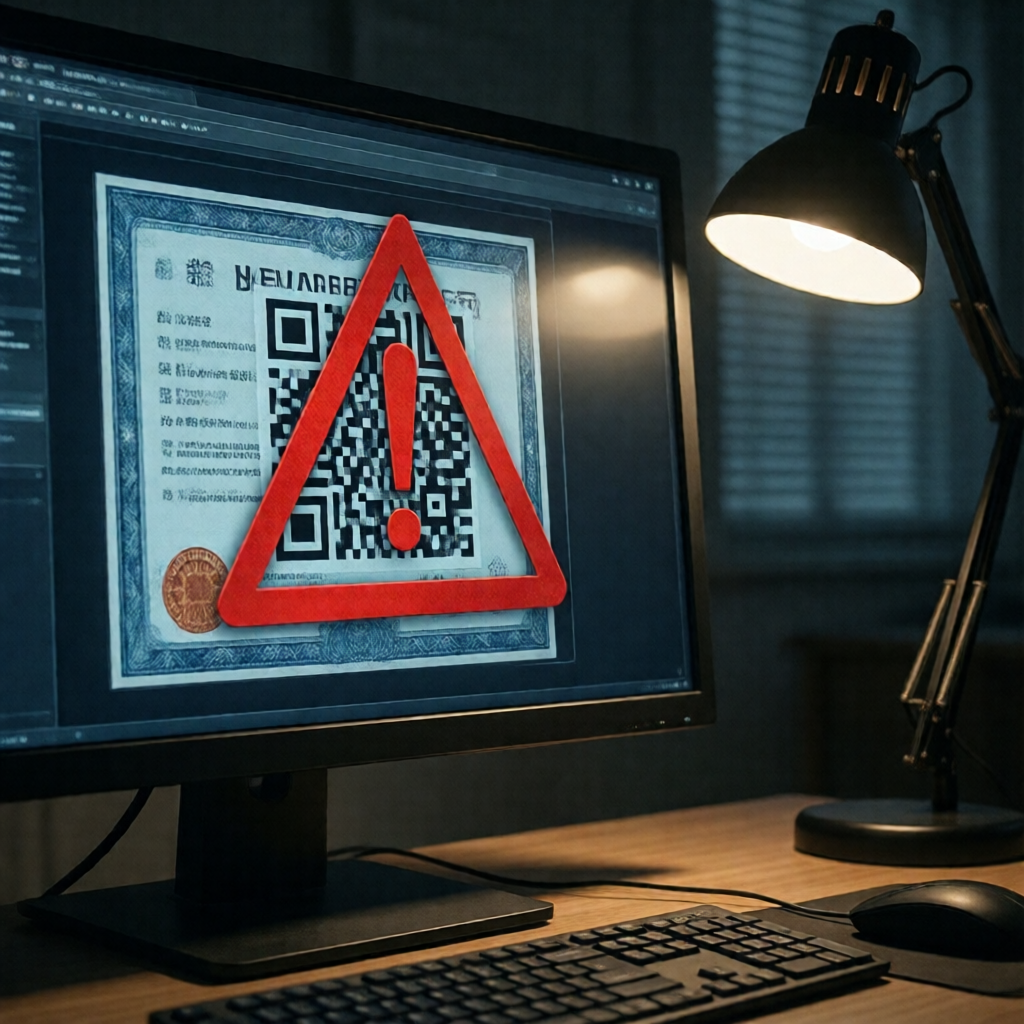
"Fraud doesn't usually look fake. It looks slightly off — a missing ID number, a logo that's close but not right, an expiration nobody bothered to check."
- No issuer registry or public lookup available — the cert can't be independently confirmed
- Certificate PDF has no unique ID, QR code, or verification link — it's purely decorative
- Issuing body not listed in CHEA, NCCA, or any state licensing database
- Name on the credential doesn't match legal government ID exactly
- Expiration date has passed with no renewal record or continuing education proof
The most common failure isn't a forged document. It's a real credential that expired two years ago and nobody renewed. Know what you're looking at before you trust it. Falsifying professional credentials in formal hiring or licensing processes is illegal — the records must reflect legitimate, verifiable credentials, full stop.
The fastest way to pass any verification check is holding a certification backed by a live, publicly queryable trust badge — one any employer, client, or platform can verify in seconds. See how CertifyUSA's trust score and business verification work together to give you that layer of instant credibility.
Frequently Asked Questions
What documents are typically required for credential verification?
Most verifiers require the original certificate or diploma, a government-issued photo ID with a matching name, and the issuing institution's registry URL or contact information. Digital credentials must include a unique verification link or a trust badge that resolves to a live record. A static image won't do.
How long does credential verification take in the US?
Basic online checks take minutes if the issuer maintains a public registry. Manual verification through state licensing boards typically runs 2–5 business days. For international credentials, the timeline extends to 2–4 weeks due to translation, evaluation, and cross-border record requests.
Can a trust badge replace a formal credential verification?
A trust badge issued by a recognized third-party verifier provides instant, publicly queryable proof — which satisfies most employer and platform checks without requiring manual follow-up. It works alongside the original credential, not instead of it. Think of it as the credential's always-on verification layer.
Run through this checklist once and you'll catch what a quick glance misses. That's the entire point.
Need a credential that passes every check?
CertifyUSA issues publicly verifiable trust badges with live registry lookup — built for employers, freelancers, and platforms.
Start Your Verification →Bottom Line
Credential fraud costs employers and platforms billions each year — but the fix is simple. Use primary-source verification, check expiration dates, confirm current standing, and demand a live digital record wherever possible. A credential that can't be verified in real time is a liability, not an asset. The checklist above takes under 15 minutes and eliminates the guesswork entirely.
Frequently Asked Questions
What is the most common form of credential fraud in the US?
Degree fraud tops the list — applicants claim credentials from real institutions they never attended, or submit diplomas from diploma mills that confer degrees without academic work. License inflation (listing an expired or lapsed license as active) is the second most common type, particularly in healthcare, real estate, and financial services.
Is it legal for employers to verify credentials without telling the applicant?
Under the Fair Credit Reporting Act (FCRA), employers using a third-party consumer reporting agency for background checks must obtain written consent before the check and provide an adverse action notice if the results affect a hiring decision. Verifying credentials directly with an issuing institution — such as calling a university registrar — does not trigger FCRA requirements, though disclosure is considered best practice.
Do self-employed workers need verified credentials?
Increasingly, yes. Platforms like Upwork, Toptal, and industry-specific marketplaces now require verifiable proof of claimed skills and licenses before granting top-tier status or high-value project access. A publicly queryable trust badge closes that gap without requiring clients to run their own checks every engagement.
How do I verify a foreign credential for US employment?
Contact a NACES-accredited evaluation service such as WES or ECE. They compare the foreign qualification against the US equivalent, verify authenticity with the issuing country's registry, and issue a formal equivalency report — typically accepted by US employers, licensing boards, and academic institutions.
CertifyUSA Team
Our content is reviewed by business certification and compliance professionals. We cover trust badge implementation, content authenticity verification, and business certification best practices to help businesses build credibility online.
Related Articles
Website Legitimacy Checker — How to Verify If a Website Is Real (2026)
Use a website legitimacy checker to spot scam sites fast. Learn what trust badges, SSL seals, and business certifications actually signal — and how CertifyUSA helps prove your site is real.
Certificate Template for Small Business | Create Professional Certificates
Need a certificate template for your small business? Learn how to create professional certificates that build trust, cover key use cases, and choose between downloadable vs hosted badge approaches.
Trust Badges for Ecommerce — Boost Conversions & Reduce Cart Abandonment
Learn which trust badges to add to your ecommerce store to increase checkout conversions, reduce cart abandonment, and build shopper confidence in 2026.
Ready to certify your business?
Join thousands of verified businesses on CertifyUSA.