Apostille for FBI Background Check 2026: Step-by-Step Guide
Need an apostille on your FBI background check for use abroad? Follow this 2026 step-by-step guide covering channels, timelines, and costs.
Your job offer in Germany is conditional on a clean background check. Your residency application in Brazil has a hard deadline. You've got the FBI Identity History Summary in hand — and then the foreign consulate won't touch it. That's the moment most people discover they needed to start this process six weeks ago.
Getting an apostille for FBI background check purposes means one thing: a federal authentication from the U.S. Department of State. Not a state stamp. Not a notarization. The path is short. The mistakes people make on it are completely avoidable.
- Step 1: Get your official FBI Identity History Summary — via FBI directly or an approved channeler
- Step 2: Submit the original to the U.S. Department of State — mail or in-person only
- Step 3: Allow 3–10 weeks depending on method — budget for translation if required
- State apostilles don't work here — FBI is federal; only State Dept can authenticate it
What an Apostille Is — and Why Your FBI Check Needs One
An apostille is a standardized authentication certificate born from the 1961 Hague Convention. It signals to a foreign government: this document is legitimate, confirmed by the issuing country's competent authority. Without it, your FBI background check is just paper to a foreign bureaucrat.
The FBI is a federal agency — and that distinction is everything. Birth certificates get apostilled at the state level because they're state documents. The FBI Identity History Summary is federal, so only the U.S. Department of State has authority to authenticate it. A state apostille on a federal document is wrong and will be rejected abroad. Every time.
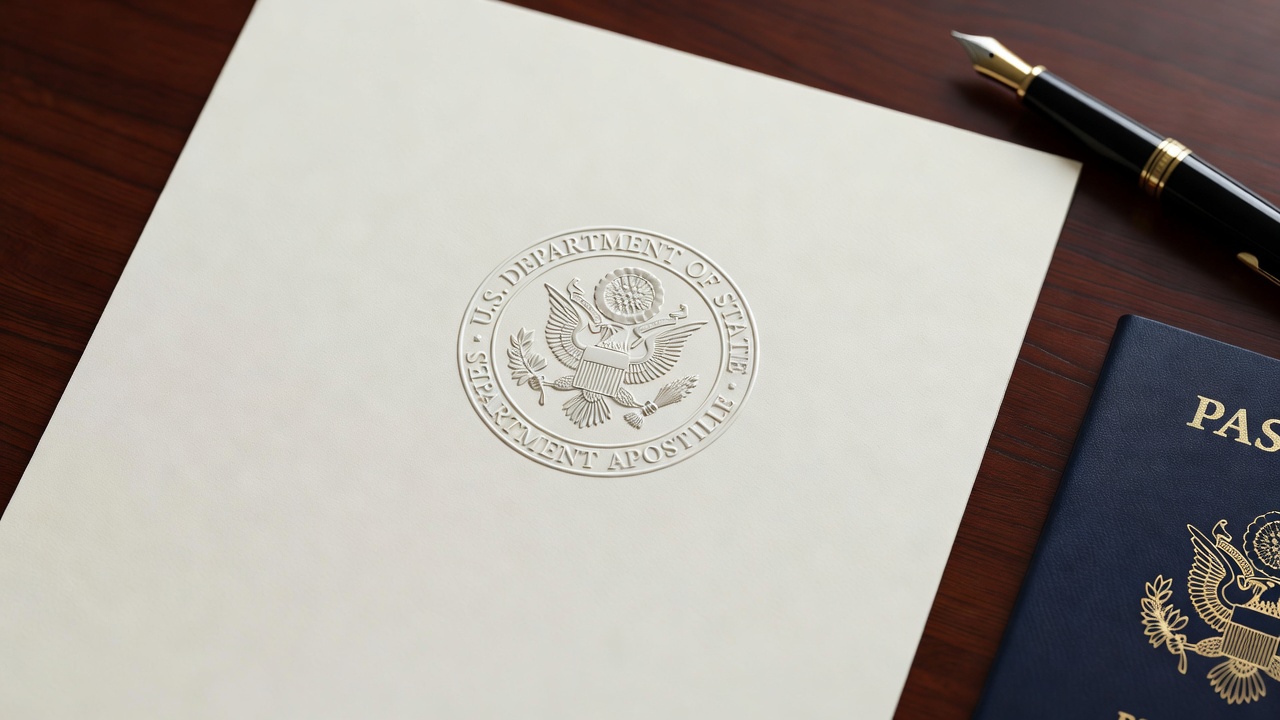
Critical caveat: if your destination country hasn't ratified the Hague Convention, an apostille is useless. You'll need embassy legalization — a separate, longer process. Confirm with the destination country's embassy or consulate before spending a dollar on anything.
Step-by-Step: Getting Your FBI Background Check Apostilled in 2026
-
1Request your FBI Identity History Summary. Use the FBI's official Identity History Summary Request page or an FBI-approved channeler — Fieldprint and IdentoGO are the two most common. The FBI direct route takes 3–5 business days electronically, plus additional time for a hard-copy certified result. Channelers are faster.
-
2Receive the original, official document. The State Dept requires the FBI-issued original — not a scan, not a photocopy, not a PDF you printed at home. Copies are returned without processing. If you requested results electronically, follow the FBI's separate process to obtain a certified hard copy.
-
3Submit to the U.S. Department of State Office of Authentications. Mail the original document with the $20 fee (check or money order payable to the U.S. Department of State), a cover letter stating the purpose, and a prepaid return envelope. In-person appointments are available but limited — check the website early if you need that route.
-
4Wait for the apostille. Routine mail processing runs 4–6 weeks in 2026. FBI-approved channelers can deliver the full package — background check plus apostille — in 2–3 weeks. No official expedited lane exists directly at the State Dept. Verify authorization for any service claiming otherwise.
-
5Arrange a certified translation if required. This step happens after the apostille comes back. Germany, Spain, Brazil, and Japan routinely require it. Budget an extra 5–10 business days and $50–$150 depending on document length.
An FBI-approved channeler like Fieldprint or IdentoGO can shorten Step 1 from three-plus weeks to just 2–5 business days. They submit fingerprints directly to the FBI and deliver a certified result ready for apostille submission — far faster than the standard mail-in route.

The 2026 U.S. Department of State fee is $20 per apostille document. That's the only official government charge. Any additional cost comes from channeler services, expedited handling, or translation — none of which go to the government.
The 3 Mistakes That Derail Most Applications — Plus a Cost Comparison
The process isn't complicated. Three specific errors account for nearly every rejection.
Mistake #1: Submitting a non-original document. The State Dept accepts only the original FBI-issued result. A scanned PDF or photocopy gets returned — adding weeks to your timeline and nothing to your application.
Mistake #2: Going to your state government for the apostille. State Secretaries of State handle state documents. The FBI is federal. A state apostille on an FBI background check is wrong and meaningless to a foreign government.
Mistake #3: Skipping the Hague membership check. 125+ countries are members — but several aren't. Non-members require embassy legalization: a different process, different timeline, different cost. Confirm before anything else.
The biggest time-killer isn't the government processing window — it's people starting over after a rejected submission. Get the original document. Use the right authority. Do it once.
For broader context on how document authentication works across different use cases, CertifyUSA's Certificate of Conformity guide and Website Verification Badge resource cover how authentication translates across contexts. If compliance documentation is part of your workflow, the Certificate of Compliance article covers the distinctions worth knowing.

Relocating abroad for work, residency, or a long-stay visa in 2026? Start this process at least 6–8 weeks before your application deadline — longer if you're going DIY. Use a channeler if your timeline is tight. And verify Hague membership for your destination country before doing anything else. Ten minutes of confirmation now saves weeks of backtracking later.
Your Questions, Answered
How long does it take to get an apostille on an FBI background check?
FBI direct plus U.S. Department of State by mail: 8–10 weeks in 2026. Using an FBI-approved channeler for Step 1 and mailing to State Dept: 3–5 weeks. In-person State Dept appointments exist but are limited — check availability early if speed is critical.
Can I get a state apostille on my FBI background check?
No. The FBI is a federal agency; only the U.S. Department of State can apostille an FBI Identity History Summary. State-level apostilles are valid for state-issued documents only — birth certificates, marriage licenses, state court records. Applying one to a federal document is both incorrect and useless abroad.
Which countries accept an apostilled FBI background check?
Any of the 125+ countries that have ratified the 1961 Hague Convention. Countries outside the Convention require embassy legalization instead — a separate, country-specific process. Always confirm exact requirements with your destination country's embassy before beginning either process.
Do I need a certified translation after apostilling?
Many countries require one. Germany, France, Brazil, Japan, and Spain are common examples. Translation happens after you receive the apostille back from the State Dept. Budget 5–10 extra business days and check the specific requirements of your destination's immigration authority.
You can also review the full state-by-state apostille checklist for 2026 — useful if you have additional state-issued documents that need authentication alongside your FBI check.
Need to verify and certify business documents?
CertifyUSA helps businesses display verified credentials, trust badges, and compliance certifications that hold up to scrutiny — domestically and internationally.
Explore Business Certification →Bottom Line
Apostilling an FBI background check is a precise, multi-step process — but it's manageable if you follow the right sequence.
- Use the FBI Identity History Summary, not a state check
- Submit via USPS registered mail to the U.S. Department of State
- Budget 8–14 weeks total including FBI processing and apostille turnaround
- Confirm your destination country's exact requirements before you start
- Non-Hague countries require embassy legalization, not an apostille
Frequently Asked Questions
Can I use an apostilled FBI background check for a work visa?
Yes — most countries requiring a clean background check for work visa applicants accept a U.S. Department of State apostille on your FBI Identity History Summary. However, requirements vary by country and visa category. Germany, the UAE, South Korea, and Australia all accept this format; confirm specifics with the relevant embassy or consulate before submitting your application.
What if my FBI check comes back with errors or missing records?
You have the right to challenge inaccurate FBI records through a formal dispute process. Submit a written request to the FBI's Criminal Justice Information Services (CJIS) Division along with fingerprint cards and any supporting documentation. Resolution typically takes 3–6 months — factor this into your timeline if you're working toward an immigration deadline.
Does the apostille expire?
The apostille itself has no official expiration date, but the FBI background check it authenticates does. Most immigration authorities require the underlying check to be issued within the past 3–6 months. Request your FBI check only when you're ready to proceed — don't get it apostilled months in advance of your actual submission.
Is a notarized copy of my FBI check acceptable instead of an apostille?
No. Notarization and apostille authentication are entirely different processes. A notary public verifies the identity of a signer; an apostille certifies the authenticity of an official government document for international use. Foreign authorities will reject a notarized FBI check in place of an apostilled one.
CertifyUSA Team
Our content is reviewed by business certification and compliance professionals. We cover trust badge implementation, content authenticity verification, and business certification best practices to help businesses build credibility online.
Related Articles
How to Verify Professional Credentials Online (2026 HR Guide)
HR teams: learn the fastest ways to verify professional credentials online in 2026 — step-by-step methods, trusted tools, and red flags to watch for.
Sustainability Certification Badge for Websites | Verified Green Business Seal
Learn how to display a sustainability certification badge on your website. Show customers you're a verified green business with an eco-friendly trust seal that builds credibility.
Green Business Certification Badge: Display Your Eco Trust Badge (2026)
Learn how to get and display a verified green business certification badge on your website. Show customers your sustainability commitment with a trusted eco trust badge.
Ready to certify your business?
Join thousands of verified businesses on CertifyUSA.