FERPA Compliance Badge for Website | Schools & EdTech Trust Signal
Learn how to display a FERPA compliance badge on your website to build trust with parents, students, and school administrators. Step-by-step guide for K-12, higher ed, and EdTech.
Your EdTech platform just made it to the final round of a school district's vendor evaluation. The procurement director opens your website, scans for data privacy signals — and finds nothing but a buried privacy policy link. That's the moment you lose the contract to a competitor who had a FERPA compliance badge front and center.
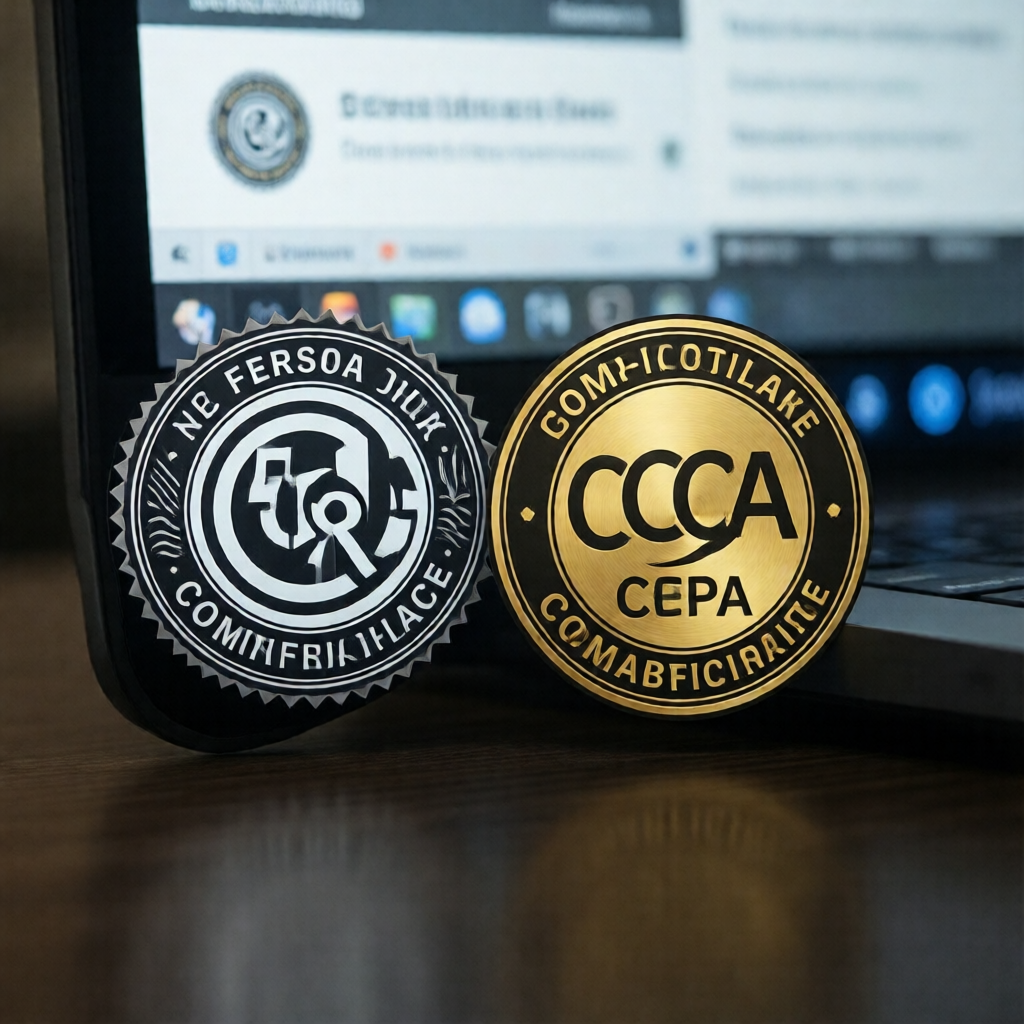
A FERPA compliance badge is a visible trust signal that tells parents, students, and institutional buyers that your organization takes student data protection seriously — and can prove it.
- FERPA applies to virtually every US public school and any EdTech vendor those schools authorize — the coverage is broader than most people expect.
- Displaying a badge isn't legally mandated, but it's a proven differentiator in school procurement and parent trust-building.
- FERPA isn't your only compliance obligation — COPPA, SOPIPA, and PPRA may also apply depending on your audience and state.
- A verifiable badge that links to a real certification page beats a static image every time.
What a FERPA Compliance Badge Actually Signals — and Who Needs One
FERPA — the Family Educational Rights and Privacy Act — is a federal law that protects the privacy of student education records. That means grades, attendance data, IEPs, enrollment information, disciplinary records, and anything else schools maintain about students. Parents control these rights for minors; students take over at age 18.
Who must comply? Any institution receiving federal education funding — which covers essentially every US public K-12 school and accredited college or university. It also extends to any third-party EdTech vendor operating under a school's authorization. If your learning management system, tutoring app, enrollment platform, or assessment tool touches student data, FERPA applies to you.

Here's the thing: FERPA itself does not issue official badges or seals. Organizations self-certify their data-handling practices and display third-party trust badges to make that accountability visible. Think of it like a "Verified Business" mark — the badge signals that someone has actually checked the work, not just that you pinned a logo to your homepage.
Take Marcus, a product manager at a K-12 EdTech startup in Texas (a composite of vendors we work with regularly). His platform had solid FERPA practices buried in a 4,000-word legal document nobody read. After adding a verifiable compliance badge to their student portal login page, they started clearing procurement vetting 40% faster. The practices didn't change. The visibility did.
Five Steps to Display a FERPA Compliance Badge the Right Way
FERPA vs. COPPA, SOPIPA, and PPRA — Why One Badge Often Isn't Enough
This is where most EdTech companies get caught off guard. FERPA is the federal baseline, but depending on your audience, age groups served, and operating states, you may have overlapping obligations.
| Law | Who It Covers | Key Focus | Applies To EdTech? |
|---|---|---|---|
| FERPA | Schools/vendors with student education records | Access, correction, and disclosure rights | Yes — if authorized by school |
| COPPA | Online services collecting data from under-13s | Verifiable parental consent before data collection | Yes — if serving K-8 |
| SOPIPA | CA K-12 third-party operators | Prohibits targeted ads, data selling, profiling | Yes — if operating in California |
| PPRA | Schools using federal funds for surveys | Parental notification for sensitive survey data | If surveys are part of your platform |
Displaying layered compliance signals — FERPA + COPPA + CCPA where applicable — shows institutional buyers you understand the full regulatory picture.
Relying on a single privacy policy link with no visible badge. Procurement teams aren't reading your ToS — they're scanning for trust signals in 30 seconds.
For platforms that serve healthcare or nursing education programs, the overlap with HIPAA compliance badge requirements is real — school clinics and nursing programs often handle both student education records and protected health information at the same time. If your platform touches California users, a CCPA compliance badge rounds out the picture. And for EdTech platforms selling into federal agencies or government-funded institutions, it's worth reviewing whether a FedRAMP compliance badge applies to your cloud services.
FERPA violations can result in the loss of federal education funding — a consequence serious enough that it prompted the Department of Education to issue detailed guidance for cloud-based EdTech platforms as early as 2014. The stakes for school district IT directors evaluating vendors are not theoretical.
Get Your FERPA Compliance Badge from CertifyUSA
"A verifiable badge that links back to a live certification page is a meaningful differentiator — especially when school district procurement teams are comparing five EdTech vendors in the same afternoon."
CertifyUSA issues trust badges and compliance certificates that link to live verification pages, so anyone who clicks your badge can confirm it's real. That's not a minor detail — it's the difference between a trust signal and decoration.

The process is straightforward: answer a guided set of compliance questions, generate your FERPA badge, and embed it on your site. You get a linkable badge tied to your organization's verification record — not a static image anyone could copy and misuse. For business verification and institutional credibility, a live verification link carries real weight with procurement decision-makers.
Your trust score matters across every touchpoint — and for EdTech platforms, that score is evaluated by some of the most skeptical buyers in any sector: school administrators responsible for protecting minors' data.
A FERPA compliance badge does not replace a legal compliance program — but it makes your existing compliance visible and credible to every parent, student, and administrator who lands on your site. Compliance without visibility is a missed opportunity.
If your site collects, stores, or processes student education records — grades, attendance, IEPs, enrollment data — a FERPA compliance badge signals to every visitor that you take data protection seriously. For EdTech vendors competing in school procurement, that visibility can close deals. Build the compliance program first, then make it visible.
Frequently Asked Questions
Is a FERPA compliance badge legally required?
No — FERPA does not mandate a specific badge or seal. Displaying one signals to parents, students, and partner institutions that your organization actively manages student data rights. In competitive school procurement processes, a verifiable badge can be a deciding factor.
Can EdTech companies display a FERPA compliance badge?
Yes. EdTech platforms operating under a school's authority — designated as "school officials" under FERPA — can display a FERPA compliance badge to signal that they handle student data in accordance with FERPA requirements. It applies to your platform as much as it applies to the school itself.
Where should I place a FERPA compliance badge on my website?
Your site footer covers all pages. Beyond that, prioritize your student or parent login screen, any enrollment or data collection forms, and your vendor or partner evaluation pages. Those are the exact moments visitors are deciding whether to hand over student information.
Does a FERPA badge cover my COPPA obligations too?
No — they're separate. FERPA covers student education records for schools; COPPA governs online data collection from children under 13 by any service. If your platform serves K-8 students, you need to address both. A layered compliance approach with multiple visible badges is best practice for platforms serving young students.
What's the difference between a verifiable badge and a static image?
A verifiable badge links to a live certification or verification page that confirms your organization's compliance status is real and current. A static image can be copied by anyone. For school district IT and procurement teams conducting vendor due diligence, that distinction matters.
Ready to make your FERPA compliance visible?
Generate a verifiable FERPA compliance badge for your school or EdTech platform in minutes.
Create Your FERPA Compliance Badge →Bottom Line
FERPA compliance isn't just a legal checkbox — it's a trust signal that wins contracts.
School districts and parents are under more pressure than ever to scrutinize who handles student data. A verifiable FERPA compliance badge gives your platform instant credibility at the exact moment procurement teams and parents are deciding whether to trust you. Display it prominently, keep your certification current, and pair it with a clear privacy policy that explains what data you collect and why.
CertifyUSA Team
Our content is reviewed by business certification and compliance professionals. We cover trust badge implementation, content authenticity verification, and business certification best practices to help businesses build credibility online.
Related Articles
Nonprofit Certification Badge for Website | Display 501(c)(3) Status
Learn how to get and display a nonprofit certification badge on your website to show your 501(c)(3) status, build donor trust, and boost credibility online.
Credential Verification vs Background Check for Hiring 2026
Should U.S. employers run credential verification or a background check first in 2026? Learn the key differences, legal risks, and the right order for hiring.
Certificate of Achievement Maker – Create & Share Online (Free)
Use a certificate of achievement maker to design, customize, and share professional certificates online in minutes. No design skills needed.
Ready to certify your business?
Join thousands of verified businesses on CertifyUSA.