Professional Credential Verification Process: 2026 Guide for Job Seekers
Learn exactly how the professional credential verification process works in 2026 — what employers check, how long it takes, and how to prepare your documents.
You got the callback. The recruiter sounds genuinely excited. Then comes the line: "We'll need to run a credential verification before we move forward." The offer suddenly feels less certain. What exactly are they checking — and what could stall it?
The professional credential verification process is how employers confirm that your degrees, licenses, and certifications are exactly what your resume claims. Not a trap. But a minor name mismatch or an expired license record can delay your offer by weeks — if you haven't prepared.
- Credential verification is not the same as a background check — it focuses specifically on degrees, licenses, and certifications.
- Employers or third-party verifiers contact issuing institutions directly to confirm authenticity.
- Most verifications complete in 3–10 business days; international credentials take longer.
- Name discrepancies are the #1 cause of delays — fix them before you apply.
- Once verified, displaying a digital trust badge signals credibility to future employers and clients.
What Is the Professional Credential Verification Process?
Credential verification is how employers confirm that the qualifications on your application are real. Your college degree, nursing license, PMP certification — anything you're claiming as a professional qualification gets checked against the original issuing source.
This is distinct from a standard background check. A credential verification vs background check comparison makes it plain: background checks scan criminal history, employment records, and sometimes credit. Credential verification is narrower — it asks only one question: did this person actually earn what they claim, and is it still valid? Many employers run both. They're complementary, not interchangeable.
Hiring platforms, healthcare systems, financial firms, and licensed trades treat this as standard — not exceptional. If your field requires a license or certification, verification is coming.
Step-by-Step: How Credential Verification Works in 2026
The process runs in a fixed sequence. Here's exactly what happens:
-
1
Consent request. The employer or their third-party verifier — HireRight, Sterling, Checkr — sends you a consent form. You authorize them to contact your institutions. No consent, no offer. -
2
Document submission. You provide copies of diplomas, licenses, and certifications — plus contact details for the issuing institution. Complete submissions move faster. Gaps stall everything. -
3
Direct outreach to issuing bodies. The verifier contacts universities, state licensing boards, or certification organizations. Degrees often route through the National Student Clearinghouse (NSC). Healthcare licenses run through the NPDB. Most state boards now offer online lookup portals that accelerate the process considerably. -
4
Results returned and reviewed. The verifier reports back to the employer. Everything matches — process closes. A graduation year that doesn't align, a license listed as lapsed — it gets flagged before the offer proceeds. -
5
Offer contingency resolved. A clean result makes your offer firm. Any unresolved flags trigger a conversation — you get a chance to explain or document — before a final decision is made.
How to Prepare Your Credentials Before Applying
Take Jamie, a physical therapist relocating from Texas to California (a composite of candidates we see regularly). She assumed her Texas PT license would transfer seamlessly — but her maiden name on her degree didn't match her current legal name on the license application. The verification flagged it. Two extra weeks, a notarized name-change document, and a delayed start date later, everything cleared. She put it plainly afterward: "I wish someone had told me to check for that before I submitted my resume."
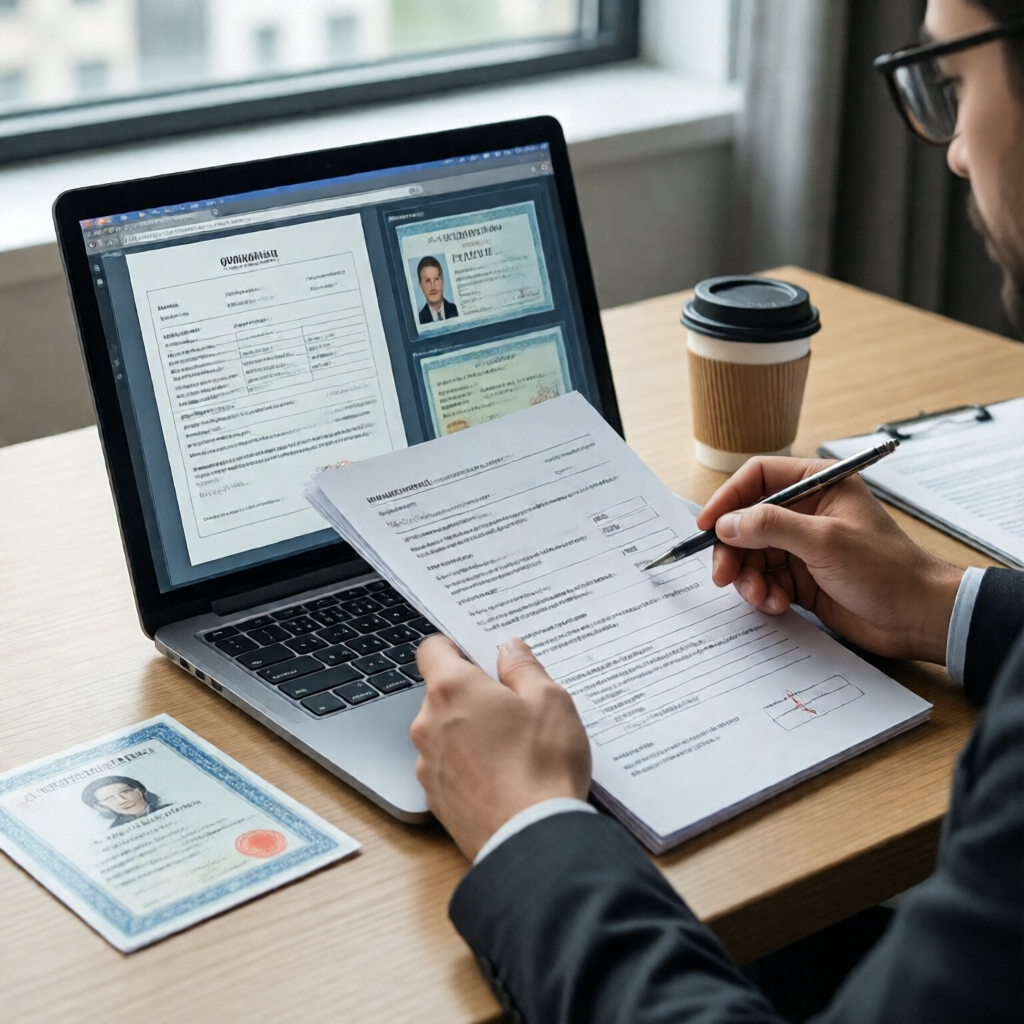
Before applying anywhere that runs credential checks, work through this list:
- Gather official transcripts with institutional seals. Unofficial PDFs won't cut it. Order sealed transcripts from your registrar — many schools now offer digital versions through Parchment or the NSC.
- Confirm your license is active. Log into your state licensing board's site and verify the status yourself. Don't assume renewal auto-processed.
- Download certification PDFs from the issuing body. CompTIA, PMI, SHRM — most organizations have a credential holder portal. Download your current certificate with issue and expiration dates visible.
- Check for name discrepancies. Compare the name on every document. Maiden vs. married name, middle name included vs. omitted — these small differences are the most common cause of verification delays.
Use our full credential verification checklist to tick off every item. Building your own hiring process? The employer credential verification checklist covers what your team needs to request and document.
Discrepancies in names or dates are the #1 cause of verification delays — fix them before you apply, not after the offer is extended.
If your highest degree is from outside the US, expect extra steps. Foreign degree credential verification typically requires a credential evaluation agency — WES or ECE — on top of direct institutional outreach. Budget 2–4 weeks beyond a standard domestic timeline.
The National Student Clearinghouse verifies over 50 million degree records annually for employers, recruiters, and licensing boards across the US — making it one of the most-used credential verification databases in the country.
What Happens After Verification — and How CertifyUSA Can Help
Once your credentials are verified, you're not just cleared — you're validated. That matters beyond the hire. Professionals who display a live-linked digital verification badge signal credibility to clients, partners, and future employers without anyone having to pick up the phone.
"Getting verified is step one. Showing it is step two — and most professionals skip the second step entirely."
CertifyUSA issues digital trust badges and certificates that link to a live verification page, so anyone who clicks can confirm your credentials in real time. The difference between saying you're qualified and proving it on demand. Explore business verification options or check certificate pricing to find what fits.
Verified credentials open doors — displaying them builds lasting trust with clients and employers. Prepare your documents now, check name consistency across every record, and make your qualifications visible once you've cleared the check.
Frequently Asked Questions
What is typically included in a professional credential verification process?
Verifiers confirm educational degrees, professional licenses, certifications, and sometimes industry association memberships. They contact issuing institutions directly or query accredited databases — the National Student Clearinghouse for degrees, state licensing board portals for active licenses — to confirm authenticity, dates, and current status.
How long does professional credential verification take in the US?
Most verifications close in 3–10 business days. Delays hit when institutions respond slowly, records are sealed, or names on documents don't match. International credentials routinely take 2–4 weeks, especially when a credential evaluation agency is involved.
Is credential verification the same as a background check?
No. A background check covers criminal history, employment records, and sometimes credit history. Credential verification focuses solely on confirming the authenticity of degrees, licenses, and certifications. Many employers run both — they're complementary, not the same thing.
What happens if there's a discrepancy in my credentials?
The verifier flags it and the employer typically gives you a chance to explain or provide supporting documentation. Minor issues — a name change — resolve quickly with a legal name-change document. Fabricated credentials are a different matter: falsifying professional documents is illegal and grounds for immediate disqualification.
Ready to make your credentials visible?
CertifyUSA issues live-linked digital certificates and trust badges that verify in one click — built for professionals who've earned the right to show it.
See Certificate Options →Bottom Line
Credential verification is the standard — not the exception.
Every degree, license, and certification you list on a resume or professional profile is subject to verification. The process exists to protect employers, clients, and the public — not to inconvenience honest professionals. If your credentials are real and documented, verification works in your favor. The bigger risk is staying invisible: credentials no one can confirm quickly are credentials hiring managers move past. Digital certificates with live verification links eliminate that friction entirely, turning a passive line on a resume into active, clickable proof.
CertifyUSA Team
Our content is reviewed by business certification and compliance professionals. We cover trust badge implementation, content authenticity verification, and business certification best practices to help businesses build credibility online.
Related Articles
Veteran-Owned Business Badge for Website | Verify & Display Military Status
Display a verified veteran-owned business badge on your website before Veterans Day (Nov 11). Show customers you've earned it — not just claimed it.
Nonprofit Certification Badge for Website | Display 501(c)(3) Status
Learn how to get and display a nonprofit certification badge on your website to show your 501(c)(3) status, build donor trust, and boost credibility online.
Credential Verification vs Background Check for Hiring 2026
Should U.S. employers run credential verification or a background check first in 2026? Learn the key differences, legal risks, and the right order for hiring.
Ready to certify your business?
Join thousands of verified businesses on CertifyUSA.